

 English
 русский
 中文简体

A plant engineer managing a 2 MW injection molding process was facing a familiar problem. The open cooling tower was letting suspended solids into the mold coo...
READ MORESep 18, 2026
Content
When a process line needs to hold a reactor at 5 °C, a chiller is the obvious choice. When the same plant needs to reject a large amount of waste heat from a condenser water loop, a cooling tower is usually the answer. The real difficulty is that many projects need both. Before choosing between them, you have to know what each machine can do and what it cannot do.
A chiller is a refrigeration machine. It extracts heat from a process fluid or building loop and keeps that fluid at a controlled temperature, often below the ambient air temperature. A cooling tower, in contrast, rejects heat from a water stream by bringing that water into contact with air and allowing evaporation. Practically, a cooling tower cannot cool water below the local wet-bulb temperature; in a real installation the leaving water is usually 3-5 °C above wet-bulb.
Choose a chiller when you need a guaranteed low temperature. Choose a cooling tower when you simply need to discard heat from a warm water loop and the required return temperature is above the local wet-bulb figure. In most water-cooled chiller plants, the two are not competing alternatives. They are components of one system.
| Comparison point | Cooling tower | Chiller |
|---|---|---|
| Primary task | Rejects heat from water | Cools a process fluid |
| Cooling mechanism | Evaporation and air contact | Refrigeration cycle |
| Practical minimum temperature | Approaches wet-bulb temperature | Controlled setpoint, often below 5 °C |
| Main energy consumers | Fans and water pumps | Compressor and auxiliary loads |
| Typical role in a chilled-water system | Heat sink for the condenser | Produces chilled water |
| Primary maintenance concern | Scale, corrosion, drift and water chemistry | Refrigerant circuit, oil and controls |
A chiller moves heat against its natural direction using a refrigeration cycle. The main components are a compressor, an evaporator, a condenser and an expansion valve. Low-pressure refrigerant absorbs heat in the evaporator, is compressed to a high pressure, then rejects heat in the condenser, and returns through the expansion valve to start again. The source side can be water, water-glycol or another process fluid. The destination side is either ambient air in an air-cooled chiller or a condenser water loop in a water-cooled chiller.
A cooling tower does not have a compressor. Warm water is distributed over fill material inside the tower, and air moves through the fill. A small portion of the water evaporates, absorbing latent heat from the remaining water and lowering its temperature. The cooled water falls into a basin or is collected and returned to the process or to the chiller condenser.
Because evaporation is the main cooling mechanism, the performance of a cooling tower changes with weather. A tower that provides ample capacity in winter can be undersized on a hot, humid day. This is why the design wet-bulb temperature is a critical number, not just the dry-bulb air temperature.
In a water-cooled chiller plant, there are two separate water circuits. The chilled-water circuit goes to the process or building loads. The condenser-water circuit goes between the chiller condenser and the cooling tower.
This configuration is common in HVAC plants, plastic processing, data centers and many industrial processes that need chilled water plus substantial heat rejection. The tower allows the chiller to reject heat at a lower condensing temperature than an air-cooled machine could, which usually improves efficiency and can reduce long-term compressor duty.
Not every tower is connected to a chiller. Many production processes simply have a warm water stream that needs to be cooled before recirculation. Injection molding machines, die-casting equipment, air compressors, transformers and induction furnaces are examples where an open cooling tower can be the only heat-rejection device.
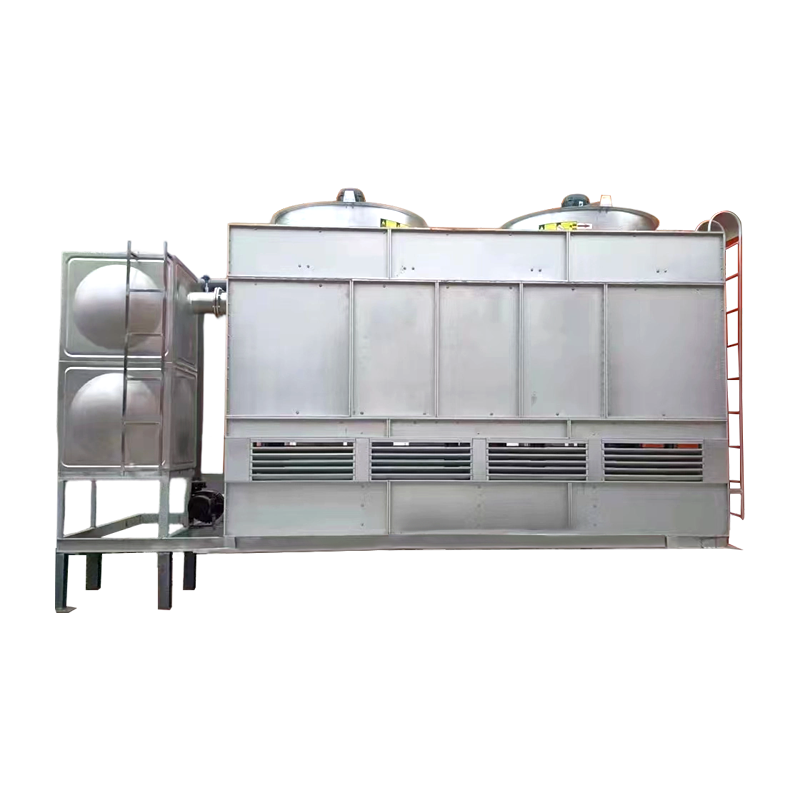
An open cooling tower exposes water directly to the air. Dust, pollen and biological growth can enter the water, so the system needs filtration, chemical treatment or both. If the primary process fluid must stay clean, a closed-circuit cooling tower is the more appropriate design. It keeps the working fluid inside a coil and uses a separate spray water circuit for evaporation.
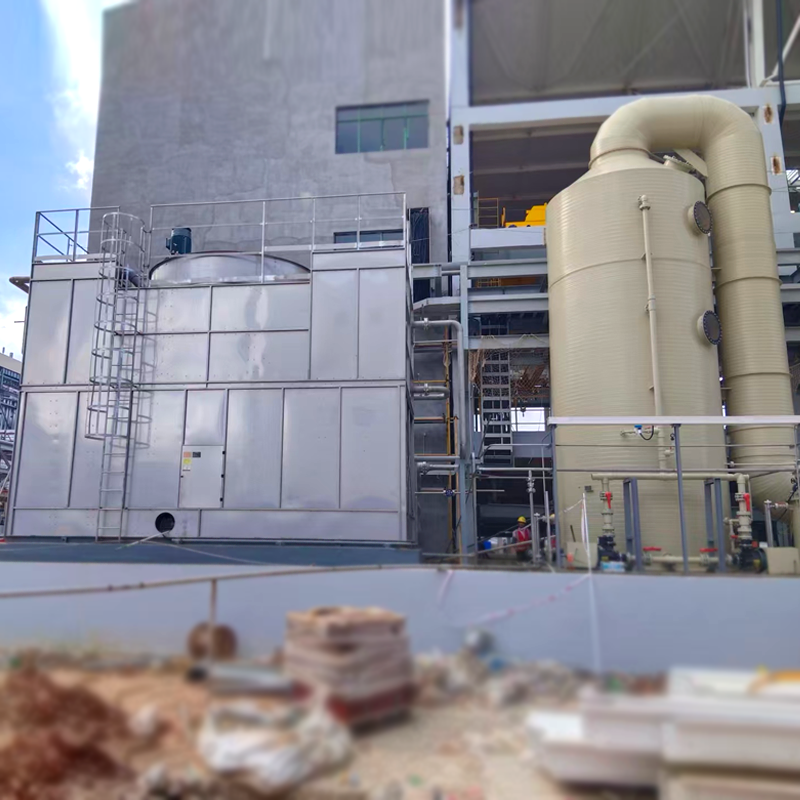
 DBN Series Closed Circuit Counterflow Cooling Tower for Clean Process FluidThis closed-circuit counterflow tower keeps the working fluid in a coil, preventing contamination while offering efficient heat exchange. Its compact vertical layout saves space, making it a practical choice when process water must stay clean.View Product →
The DBN series closed-circuit counterflow tower is one option for this type of duty. It provides the heat rejection of a cooling tower while isolating the process water from the open air.
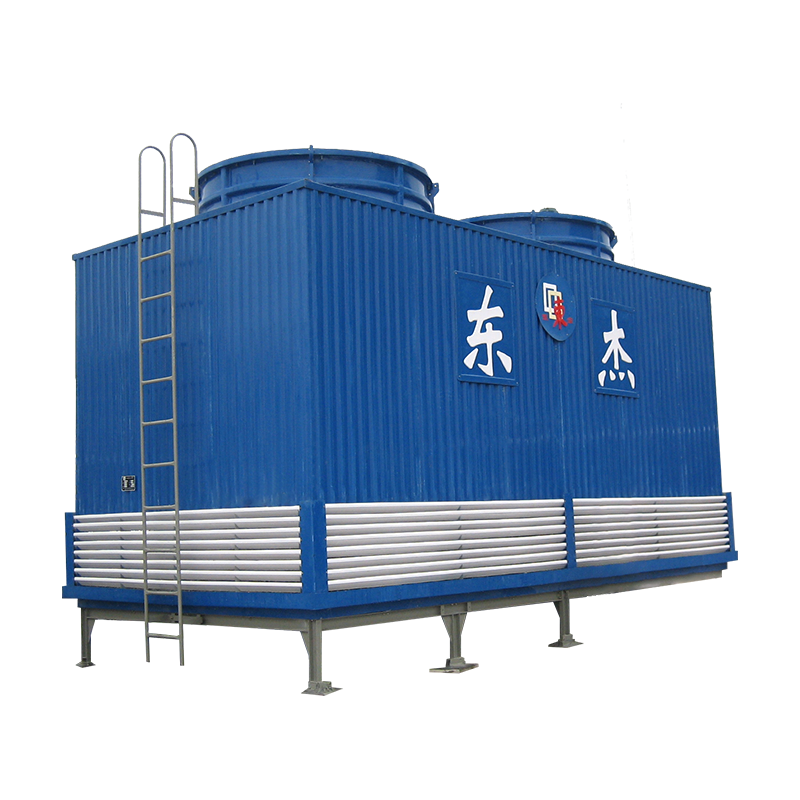
For a conventional water-cooled chiller, the cooling tower normally uses an open circuit. The condenser water can flow directly over the fill. This design is simple, efficient and lower in first cost than a closed-circuit tower. A circular counterflow tower with a bottom basin is the standard choice for many HVAC and light industrial systems.
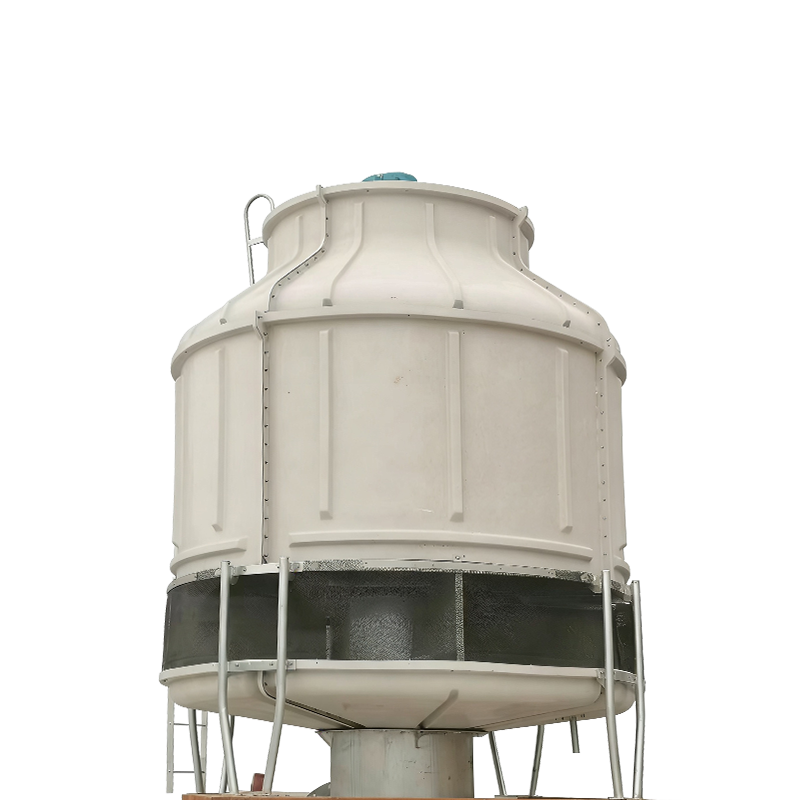
 BLSJ Series Standard Circular Counterflow Cooling Tower for Condenser WaterDesigned for conventional water-cooled chillers, this circular counterflow tower features a fiberglass body, automatic rotating water distribution, and quiet operation. It suits HVAC and light industrial systems where simplicity and low first cost are priorities.View Product →
The BLSJ series standard circular counterflow tower fits this role. It is configured for reliable condenser-water service and a compact installation footprint.
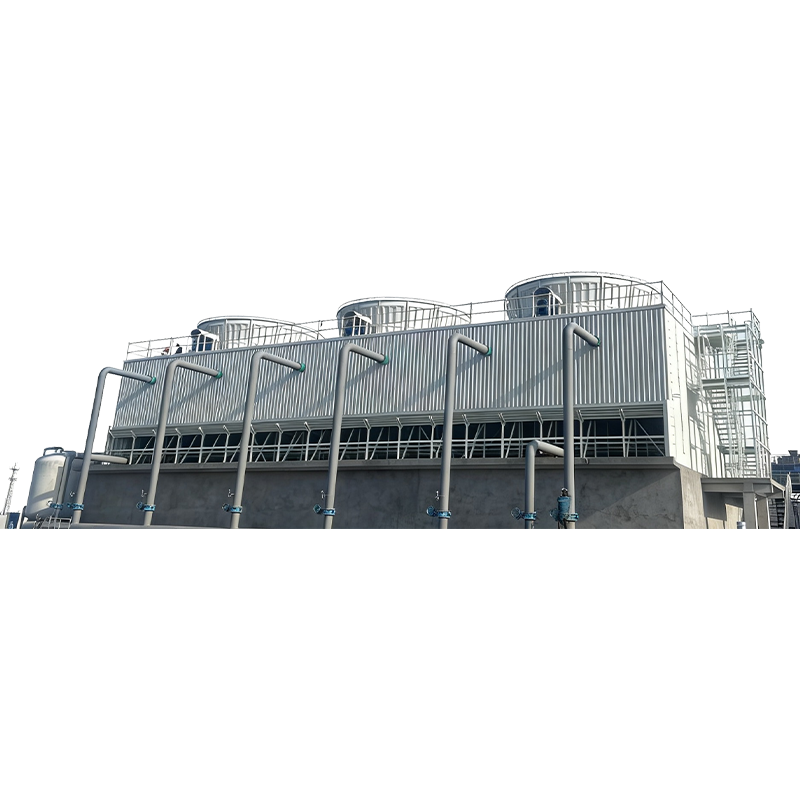
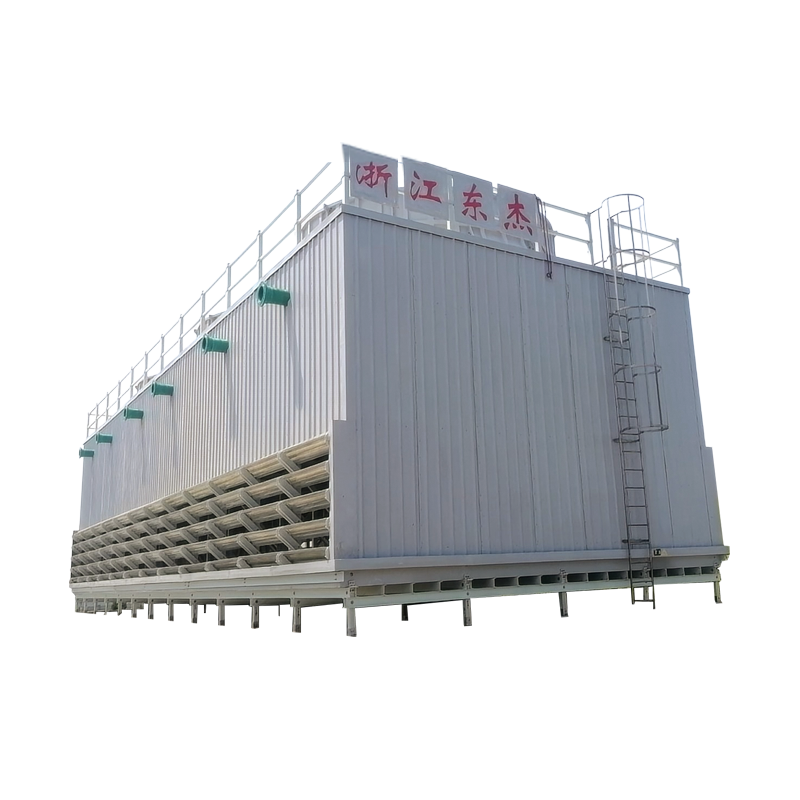
When the heat load is large and the plant layout is complex, a standard circular tower may not give the required flexibility. Steel-structure towers are assembled on site from modular cells, which allows the designer to match the tower footprint to the available space, the required capacity and maintenance access.
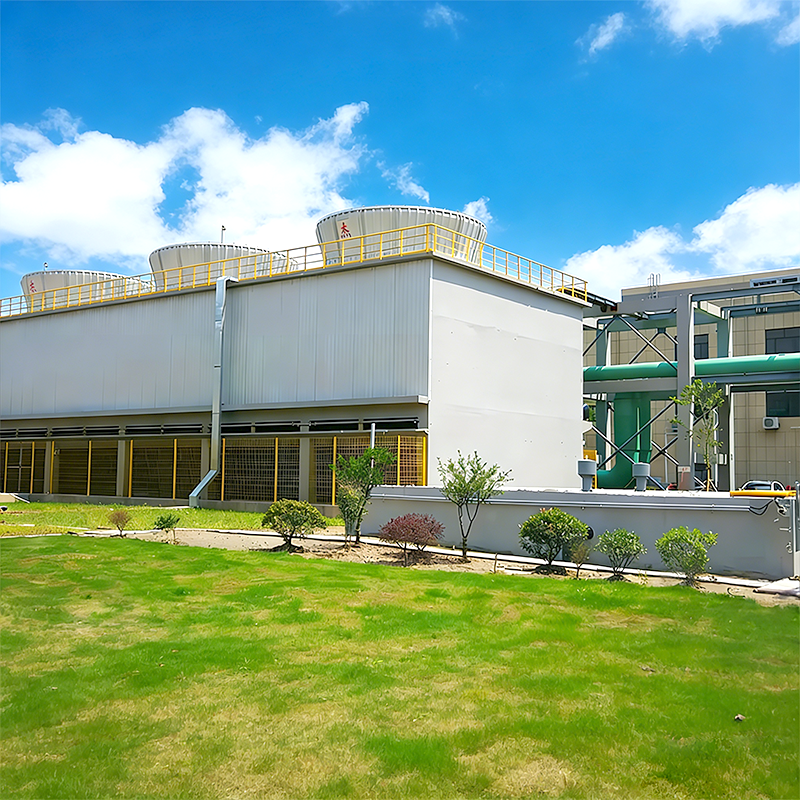
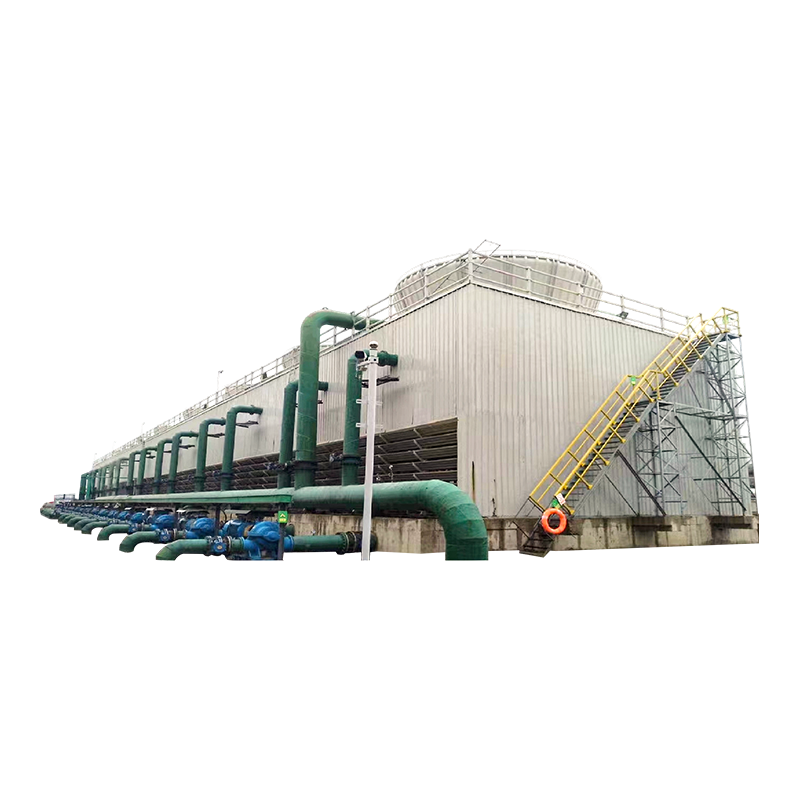
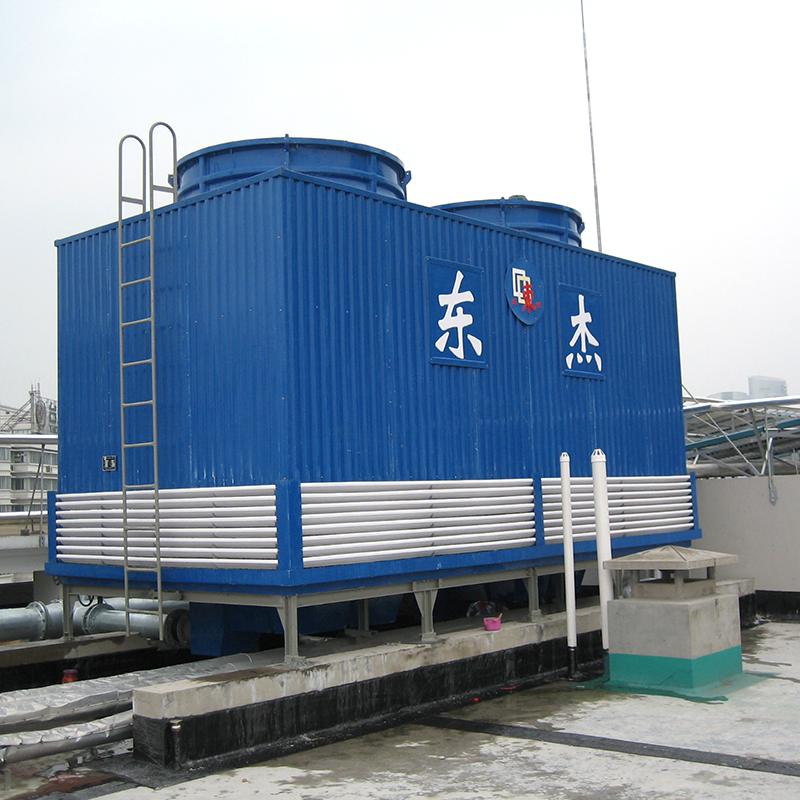 DF Series Counterflow Steel Structure Cooling Tower for Industrial ProjectsThis field-assembled steel-structure tower offers modular flexibility for large heat loads and complex layouts. It provides durable construction with corrosion protection, high efficiency, and low drift, making it suitable for demanding industrial cooling duties.View Product →
Dongjie offers a DF series counterflow steel-structure tower for these duties. It is intended for industrial projects where multiple cells, large water flow rates and structural durability are important.
The final decision should be based on a heat balance, not on habit. The questions below help avoid the two most common specification mistakes: oversizing the chiller and undersizing the tower.
Before you settle on a specification, we have outlined the key technical indicators to review before purchasing a cooling tower, including fill type, thermal capacity, drift rate, fan power and material quality.
In short, do not start a specification by asking whether to buy a chiller or a cooling tower. Start by defining the temperature your process needs and the total heat that must be rejected. The heat balance will tell you whether you need a chiller, a tower, or a matched pair.
Related Products
A plant engineer managing a 2 MW injection molding process was facing a familiar problem. The open cooling tower was letting suspended solids into the mold coo...
READ MOREIf you have ever asked “how does the cooling tower work?” you are not alone. At Zhejiang Dongjie, we work with engineers and plant operators who use cooling to...
READ MOREIndustrial cooling is among the largest consumers of energy and water in the global manufacturing economy. Chillers, cooling towers, heat exchangers, and proc...
READ MOREA cooling tower rarely fails all at once. What often happens is quieter: the cold water temperature creeps up by a degree or two over a season, drift becomes v...
READ MOREIn industrial cooling systems, water is both the most essential element and the most common source of operational problems. Scale, corrosion, fouling, and micr...
READ MOREIndustrial facilities, commercial buildings, and power generation plants all share a common operational challenge, the need to efficiently remove excess heat g...
READ MORE
dj@djcoolingtower.com
+86-0575-82433555 (Extension 0)
+86 130 6551 5158 Manager Zhang
