

 English
 русский
 中文简体

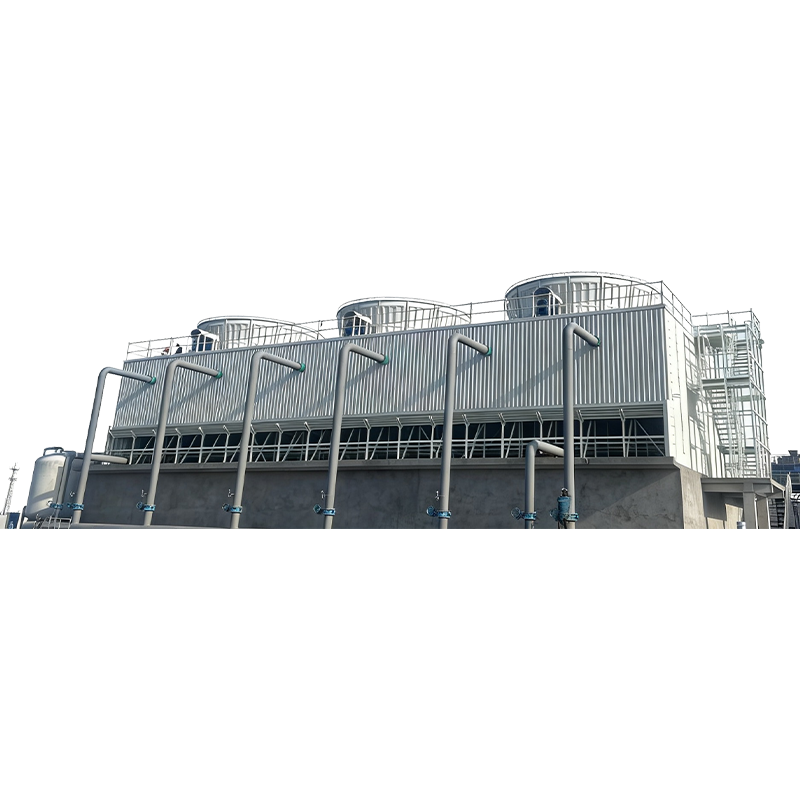
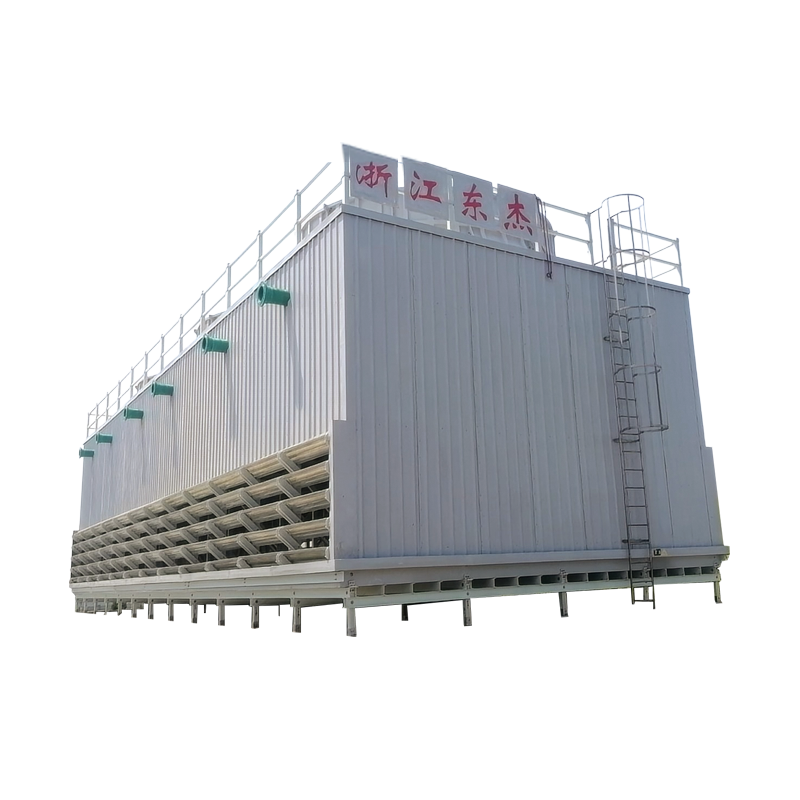
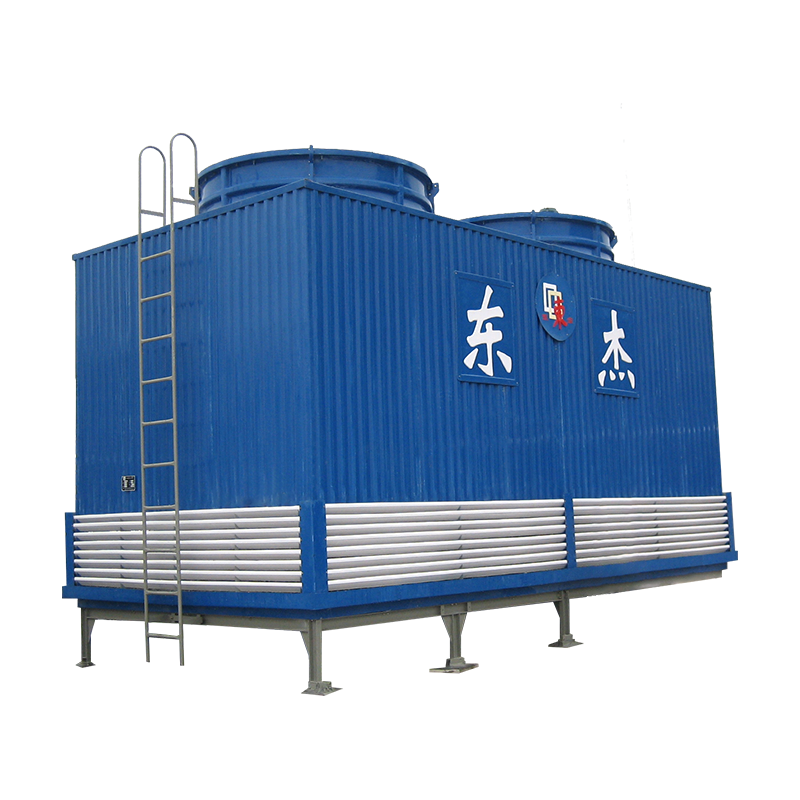
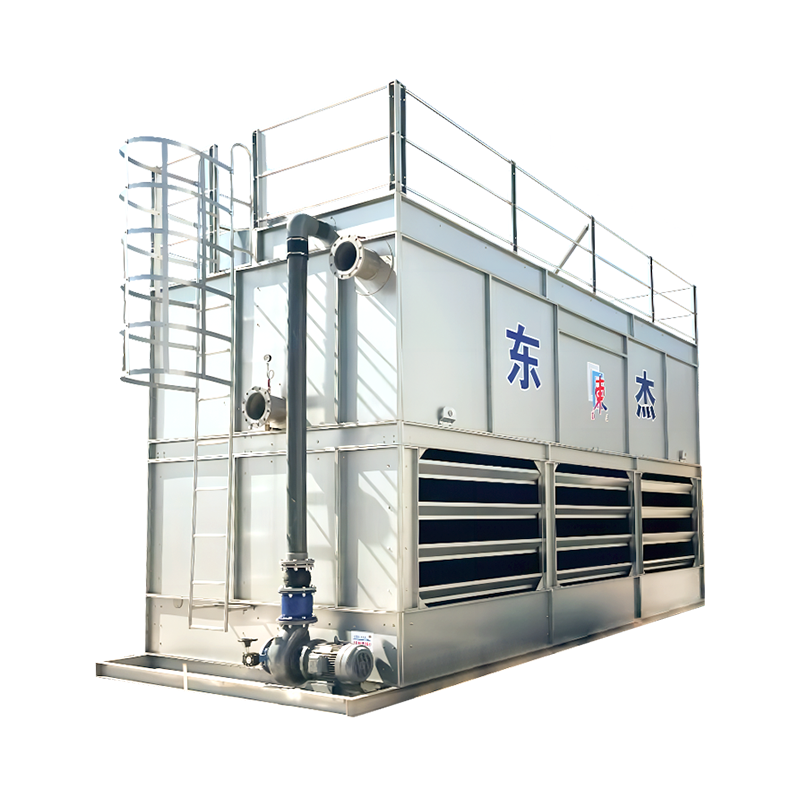
The Direct Answer: Sealed Circulation Keeps Process Water Clean A closed circuit cooling tower is considered essential for contamination-free industrial coolin...
READ MORESep 25, 2026
Content
Water efficiency in cooling towers often comes down to a simple question: how much heat do you reject for every gallon of water you circulate? Cooling towers are among the most water-intensive pieces of equipment in an industrial plant, but they also offer one of the best opportunities for savings. At Zhejiang Dongjie Cooling Tower, we have spent years designing and manufacturing towers for power, petrochemical, metallurgical, chemical, HVAC, and new energy applications. In this guide, we share the practical operating principles and design choices that help plant teams cut water use without sacrificing cooling performance.
Cooling towers continuously recirculate water, but they still consume 20 to 30 percent of a facility's total water use in many commercial and industrial settings. Three losses account for most of that consumption:
A well-managed tower can reduce these losses significantly. For every 10 degrees Fahrenheit of cooling range, evaporation is roughly 1.2 percent of the recirculation rate. Another common rule of thumb is that a tower rejects about 12,000 Btu per hour per ton of cooling, with evaporation around three gallons per minute per 100 tons. The message is clear: even a 10 percent improvement in make-up water use can be meaningful over a year of continuous operation.
Before you can improve efficiency, you need to understand the numbers that describe tower performance and water use.
| Term | Definition | Why It Matters |
|---|---|---|
| Range | Difference between hot water temperature entering the tower and cold water temperature leaving the tower. | A larger range means more heat rejected per unit of water flow. |
| Approach | Difference between cold water temperature leaving the tower and the wet-bulb temperature of the entering air. | A lower approach gives a closer theoretical limit and usually requires more tower surface area. |
| Wet-bulb temperature | The lowest temperature that evaporative cooling can theoretically reach. | It sets the ceiling for cooling tower efficiency. |
| Cycles of concentration | Ratio of dissolved solids in recirculating water to dissolved solids in make-up water. | Higher cycles reduce make-up and blowdown, but require better water treatment. |
| Blowdown | Water removed from the system to keep dissolved solids below a set limit. | Optimizing blowdown is often the fastest way to save water. |
These terms are connected. If you reduce approach too aggressively, you may need a larger tower and more fan energy. If you push cycles too high, you risk scale. The goal is to find the right balance for your site.
A widely used calculation for cooling tower efficiency is:
Efficiency (%) = Range / (Range + Approach) * 100
For example, consider a tower with hot water at 95 degrees Fahrenheit, cold water at 85 degrees Fahrenheit, and a wet-bulb temperature of 78 degrees Fahrenheit. The range is 10 degrees and the approach is 7 degrees. Efficiency would be:
10 / (10 + 7) * 100 = 58.8%
This figure shows how close the tower is to the wet-bulb limit, not how much water it consumes. A high efficiency percentage generally means the tower is doing a good job of cooling, but water efficiency also depends on cycles of concentration and blowdown control. A tower can be thermally efficient and still waste water if it operates at unnecessarily low cycles.
Cycles of concentration, or COC, directly affect the volume of make-up water and blowdown. At three cycles, for example, a tower must discharge more water to keep dissolved solids low. Increasing COC from three to six can reduce make-up water by about 20 percent and blowdown by about 50 percent in many systems.
Why do many plants stop at low cycles? Because higher cycles mean higher levels of calcium, silica, and other minerals in the water. Without the right treatment, scale can form on fill, heat exchangers, and condenser tubes. A sound water treatment program, combined with conductivity-controlled blowdown, allows the tower to operate at higher COC safely.
This is one of the lowest-cost improvements available. Installing an automatic conductivity controller is usually cheaper than paying for unnecessary water, chemicals, and sewer charges over the life of the tower.
Most water efficiency gains come from operating discipline. Here are some strategies our field engineers recommend repeatedly:
Manual blowdown tends to run too long or too short. A conductivity controller opens and closes the bleed valve based on the actual dissolved solids level, keeping COC in the target range and avoiding wasted water.
Drift eliminators capture droplets that would otherwise escape in the air stream. Modern eliminators can reduce drift losses to a small fraction of a percent of recirculation flow. They also reduce the chance of scale deposits on nearby equipment.
Dirty fill, blocked nozzles, and plugged screens disturb water distribution and create localized hot spots. Regular inspection and cleaning keep the tower close to its design performance.
Side-stream filtration removes suspended solids from the recirculating water, which helps keep heat exchangers clean and allows the treatment program to do its job. The result is often lower blowdown and more stable water quality.
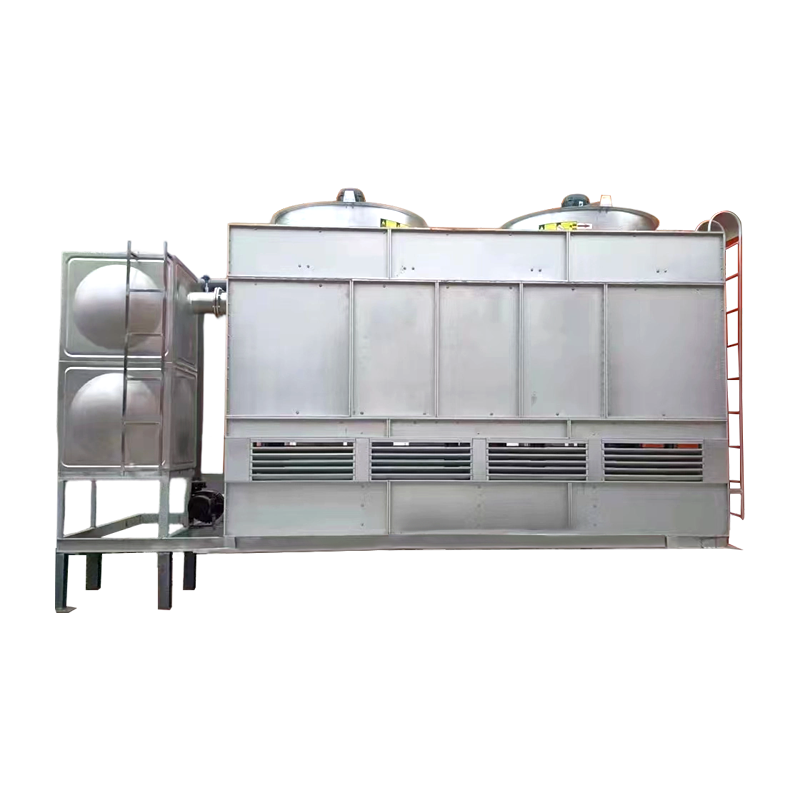
Closed-circuit cooling towers separate the process fluid from the spray water and air. The process fluid is pumped through a coil, and a spray system evaporatively cools the outside of the coil. Because the process loop is closed, make-up water, chemical treatment, and contamination are all much easier to control.
For applications such as data centers, food processing, or industrial processes where water quality is critical, this design can be a major water-efficiency advantage. Less blowdown is needed in the process loop, and the system can run for long periods without losing water quality. Our DBN series closed-circuit counterflow cooling tower is engineered for this type of application.
 DBN Series Closed Circuit Counterflow Cooling Tower for Critical Water QualityDesigned for applications like data centers and food processing, this closed-circuit tower maintains clean water with minimal blowdown, supporting long operational periods without water quality degradation.View Product →
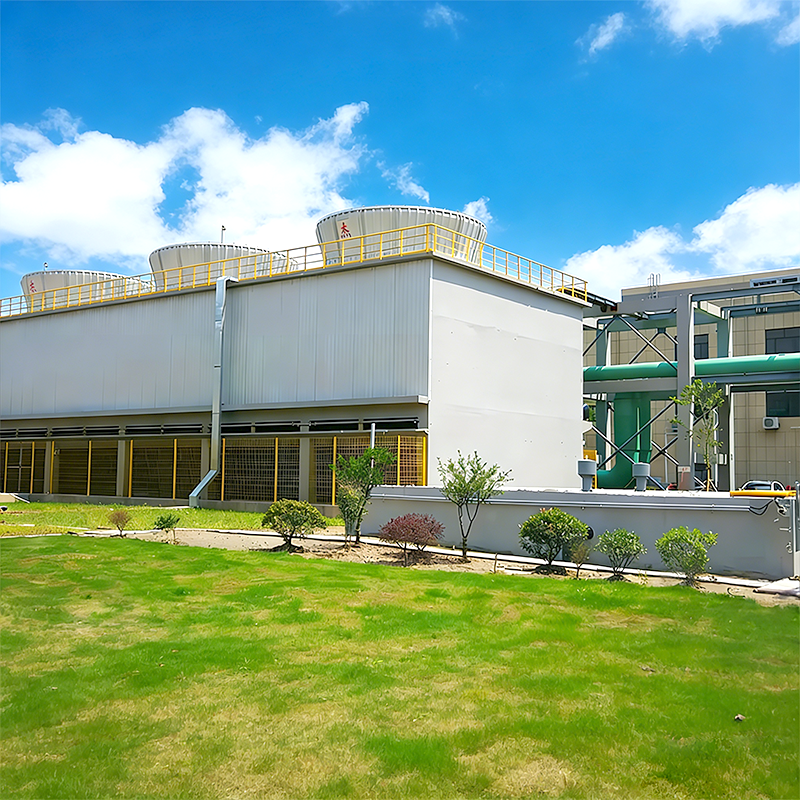
An open evaporative tower with a large cold-water basin holds a substantial volume of water. That inventory has to be treated, and it can become a breeding ground for microbes if the tower sits idle. Basinless designs reduce the water volume by eliminating the traditional basin and collecting water in a sump or directing it directly to the system return.
Less stored water means less chemical volume, less risk of stagnant water, and often lower make-up demand during startup and shutdown cycles. Our BL-II W series basinless circular counterflow cooling tower is a good choice for plants that want a compact, lower-maintenance open tower.
 BL(II)W Series Basinless Circular Counterflow Cooling TowerThis compact open tower eliminates the traditional basin, reducing stored water volume and simplifying maintenance. It suits small to medium systems using less chemical treatment and lower make-up demand.View Product →
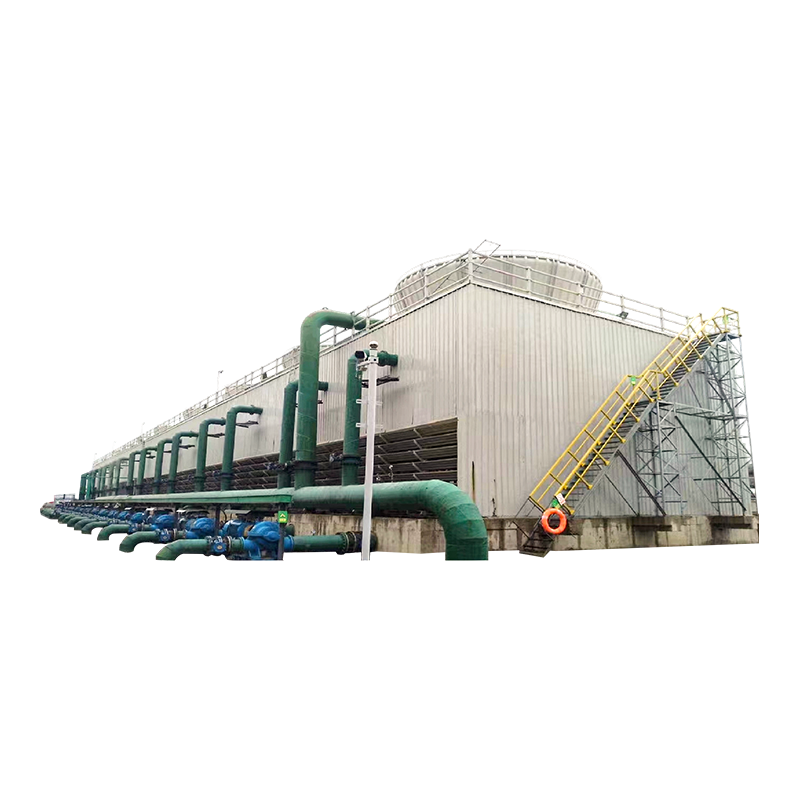
Water efficiency is not only about the water treatment program; it is also about how easy it is to maintain the tower. Large steel structure towers are widely used in power, petrochemical, and metallurgical plants because they are strong enough to support heavy internal components and provide generous access for inspection.
When a tower is easy to inspect, operators are more likely to catch a plugged nozzle or a damaged drift eliminator before it causes a measurable increase in water loss. For large industrial facilities, the DF counterflow steel structure cooling tower combines proven counterflow efficiency with a robust structural design. If you are comparing multiple options, technical indicators such as fill media type, fan efficiency, and drift loss performance deserve careful attention. We covered these in our guide to key technical indicators when purchasing a cooling tower.
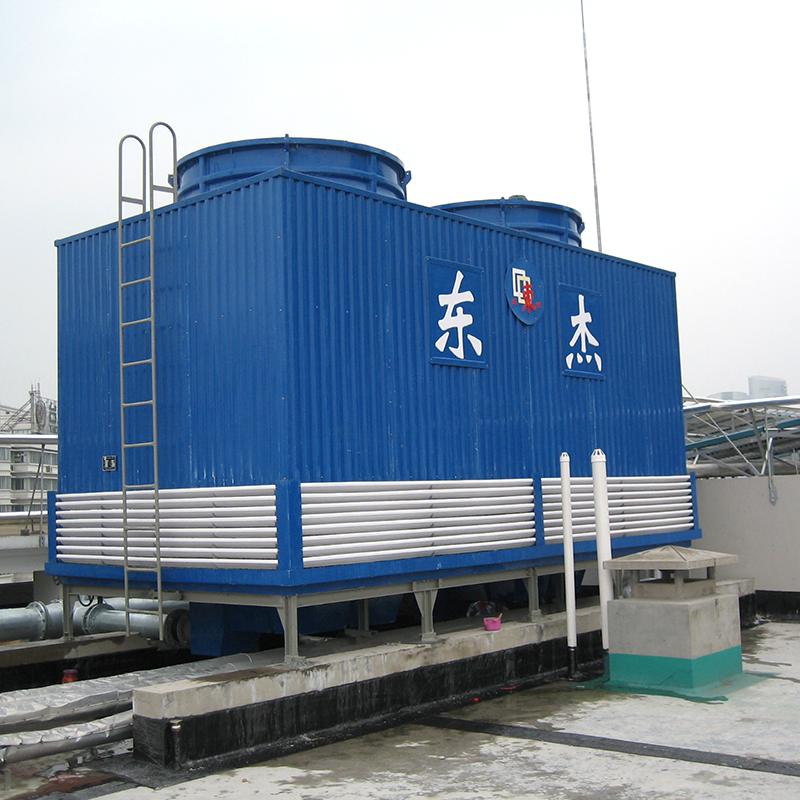 DF Series Counterflow Steel Structure Cooling Tower for Heavy Industrial UseBuilt with a robust steel frame and efficient counterflow design, this tower offers easy access for inspections. It handles large cooling loads in power, petrochemical, and metallurgical plants, with low drift and corrosion-resistant materials.View Product →
Even the best-designed tower will waste water if maintenance slips. We recommend building a monthly routine around the following checks:
By tracking water use, you can compare one month to the next and identify problems before they become expensive. A small leak or a stuck bleed valve can waste thousands of gallons without any obvious sign.
Cooling tower water efficiency is a team effort between equipment, automation, water treatment, and maintenance. Start with the basics: understand range, approach, and cycles of concentration; automate blowdown; eliminate drift; and keep every internal surface clean. When the time comes to replace or expand a system, choose a tower design that makes water efficiency easier to sustain.
At Zhejiang Dongjie Cooling Tower, we have built a reputation as a reliable high-performance cooling tower manufacturer through this same practical approach. If you are evaluating a cooling tower project, pay attention to the engineering details that reduce water use, not just the purchase price. The right decisions will reduce operating costs and support your facility's water conservation goals for decades.
Related Products
The Direct Answer: Sealed Circulation Keeps Process Water Clean A closed circuit cooling tower is considered essential for contamination-free industrial coolin...
READ MOREIn industrial cooling systems, water is both the most essential element and the most common source of operational problems. Scale, corrosion, fouling, and micr...
READ MOREAs global industrial output intensifies and sustainability mandates tighten across every major manufacturing sector, upgrading modern industrial steel structu...
READ MOREIf you have ever asked “how does the cooling tower work?” you are not alone. At Zhejiang Dongjie, we work with engineers and plant operators who use cooling to...
READ MOREAs the chemical processing and new energy sectors confront the converging imperatives of decarbonization targets, tightening environmental regulations, and th...
READ MOREIndustrial cooling accounts for nearly a fifth of global electricity consumption. As climate targets tighten and energy costs surge, the race toward high-effi...
READ MORE
dj@djcoolingtower.com
+86-0575-82433555 (Extension 0)
+86 130 6551 5158 Manager Zhang
