

 English
 русский
 中文简体

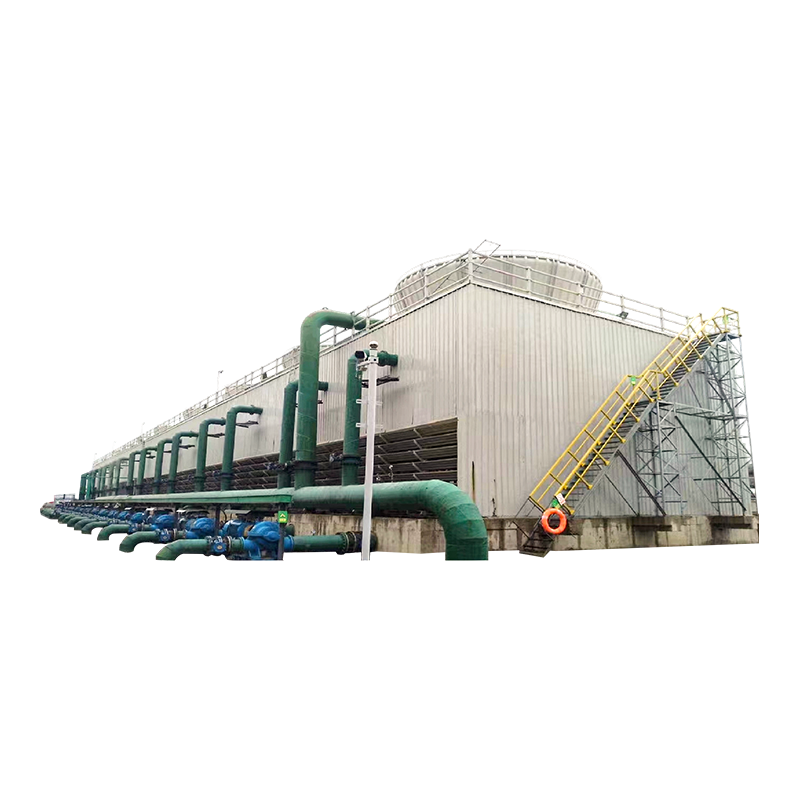
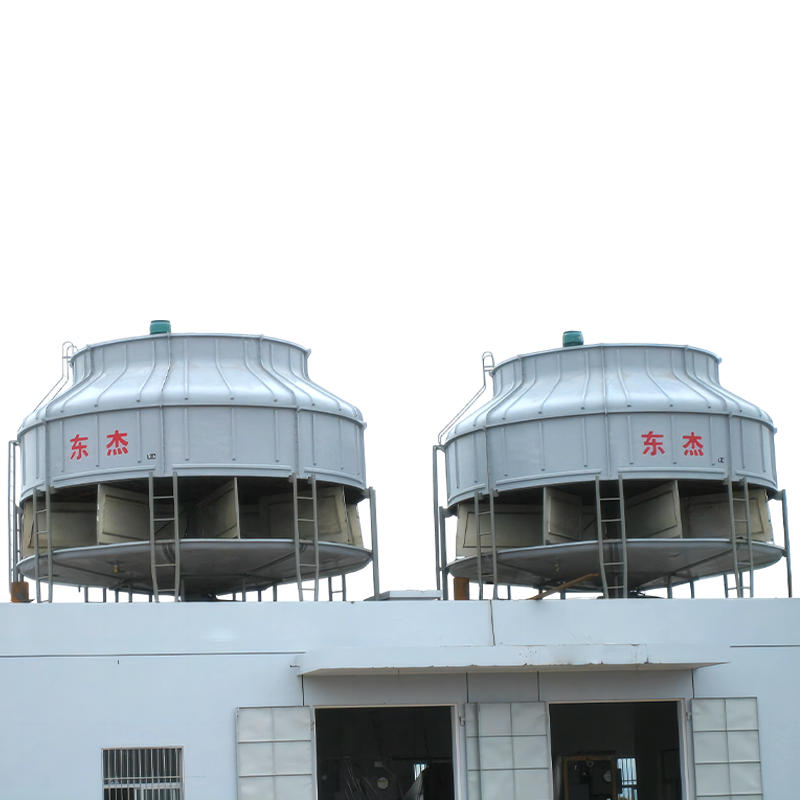
A 2 MW chiller in a commercial building rejects roughly 700 kW of heat through its condenser water loop. That heat has to go somewhere. In many mid- to large-s...
READ MOREOct 16, 2026
Content
If you have ever asked “how does the cooling tower work?” you are not alone. At Zhejiang Dongjie, we work with engineers and plant operators who use cooling towers every day but rarely have time to look at the full picture. In simple terms, a cooling tower is a heat rejection machine. It takes warm water from an industrial process or chiller, exposes it to air, and uses evaporation to remove heat. The cooler water is then sent back to absorb more heat. This guide covers the working principle, key components and design options that matter in real installations.
A cooling tower is a heat exchanger that removes heat from recirculating water before the water is returned to process equipment or building systems. Rather than keeping water and air completely separate, a cooling tower brings them into direct contact. As water moves through the tower, a small portion evaporates. That evaporation releases heat into the air and lowers the temperature of the remaining water.
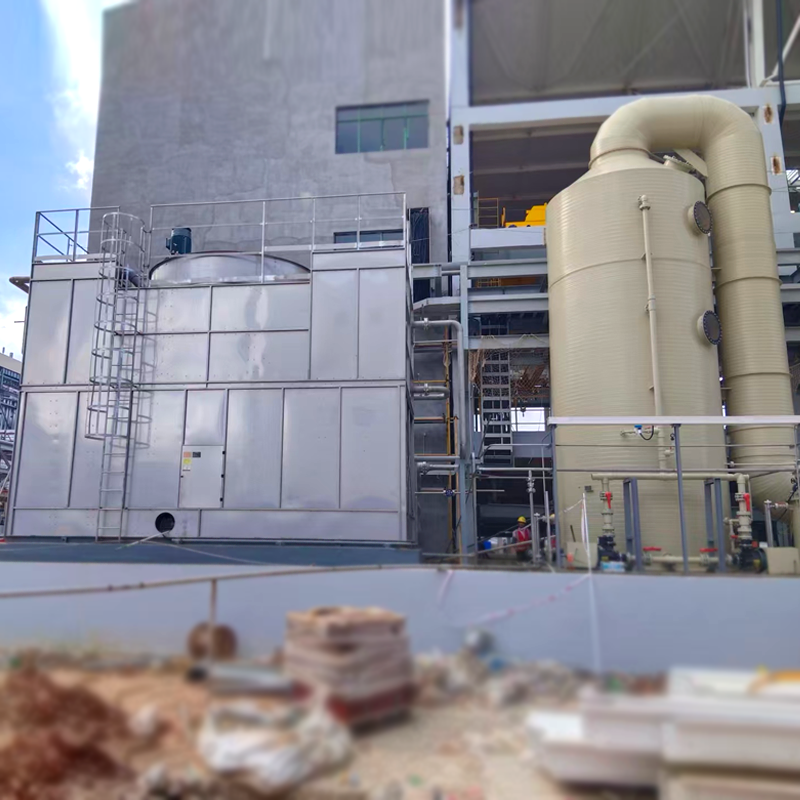
This approach is used in power plants, petrochemical facilities, metallurgy, chemical plants and HVAC systems. Wherever condensers or industrial processes generate large amounts of heat, a cooling tower offers a practical way to reject that heat continuously.
Industrial processes and air conditioning systems generate heat that must be removed continuously. If that heat is not rejected, equipment temperatures rise, efficiency drops, and production can stop. Cooling towers are often the most water-efficient way to reject large heat loads compared with once-through cooling systems. Instead of using a constant supply of fresh water and returning it to the environment, a cooling tower recirculates a large percentage of the water, which makes it practical for operations that run day and night.
The working principle of a cooling tower can be summarized in one sentence: warm water is cooled by air through evaporation. But the way air and water interact is what makes one tower different from another. In most mechanical draft towers, a fan pulls or pushes air through the tower. The air stream picks up moisture and heat, while the cooled water falls into a basin and is recirculated.
Most cooling towers are open-circuit towers, meaning the water that cools the chiller or process is the same water that falls through the fill. Because they use direct evaporation, they can cool water close to the ambient wet bulb temperature. This is why cooling tower performance depends so much on local humidity and altitude.
This cycle repeats around the clock, which is why reliability, material quality and proper water treatment all play a major role in cooling tower performance.
A cooling tower may look complex from the outside, but its main components are surprisingly straightforward. The table below summarizes what each part does in a typical mechanical draft tower.
| Component | Function |
|---|---|
| Fill | Maximizes the contact area between water and air. |
| Water distribution system | Spreads hot water evenly across the fill. |
| Drift eliminators | Capture water droplets leaving with the air. |
| Fan and motor | Move the required volume of air through the tower. |
| Basin | Collect cooled water for return to the system. |
| Louvers | Guide incoming air and limit splash loss. |
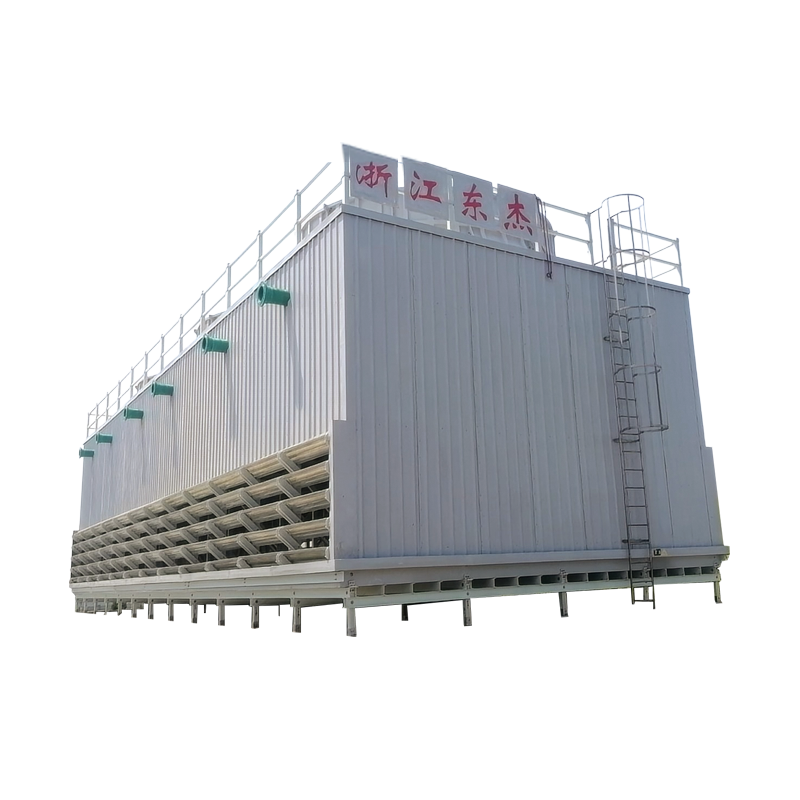
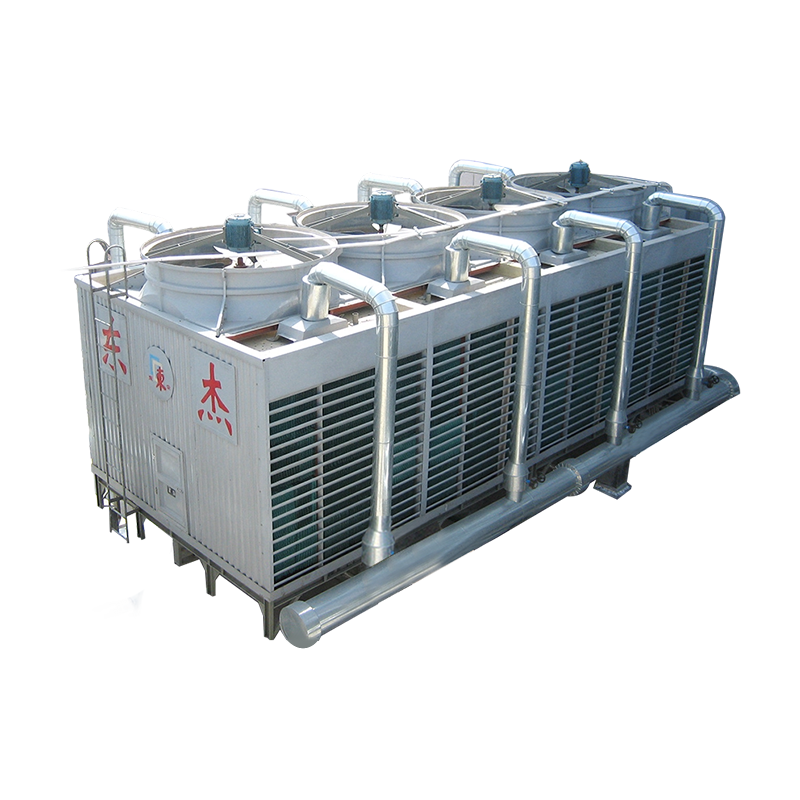
One of the first decisions in cooling tower selection is the air flow pattern. In a crossflow tower, air enters horizontally and flows across the water as it falls. The water distribution basin is usually located on top, which makes the design easy to inspect. In a counterflow tower, air enters from the bottom and moves upward against the falling water. Counterflow designs often use the fill height more effectively, so a compact footprint can handle a larger heat load.
When a rugged counterflow design is needed for industrial service, the BLS-II J series is a common reference point.
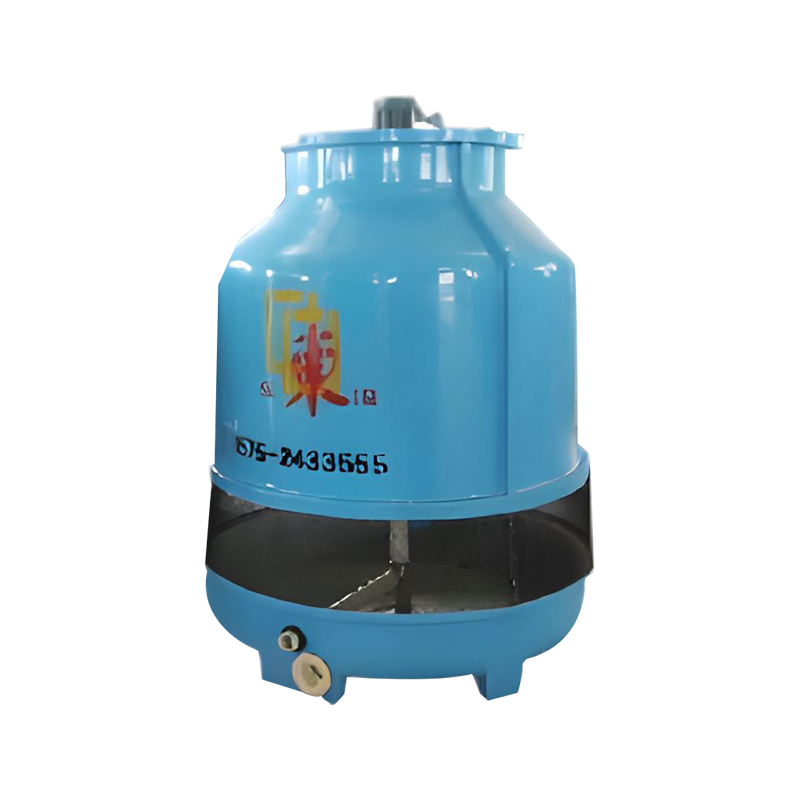 Industrial Circular Counterflow Cooling Tower (BLS-II J Series)Built for rugged industrial service, this counterflow tower offers durable fiberglass construction and advanced water distribution, making it a reliable choice for demanding closed-loop applications.View Product →
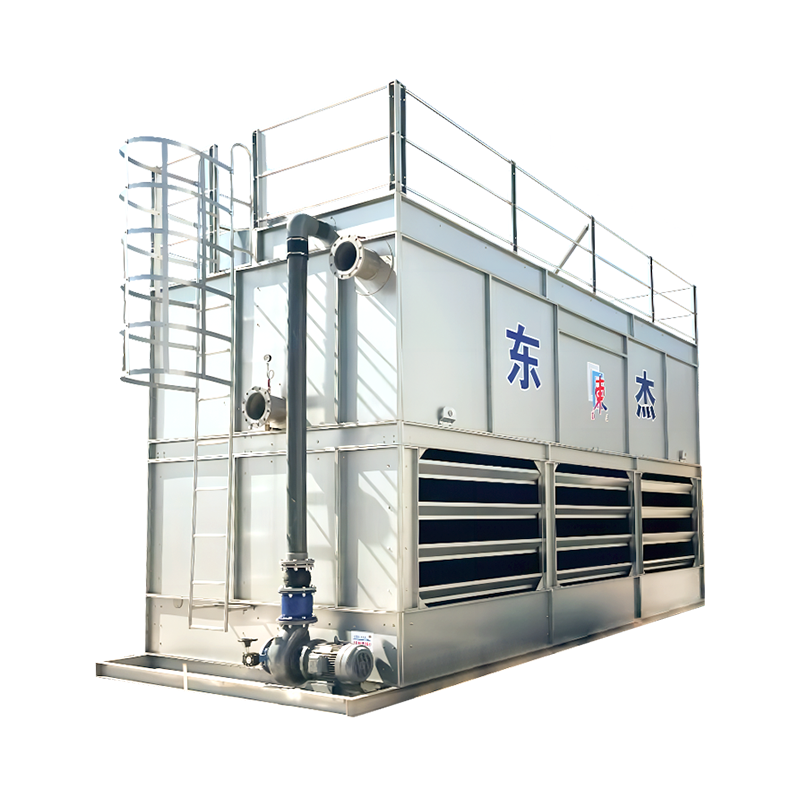
Another important distinction is whether the tower is open or closed circuit. In an open tower, the water being cooled is exposed to the air. This is efficient but means the water can pick up dust and oxygen, and chemical treatment is needed. In a closed-circuit tower, the process fluid circulates inside a coil, while air and spray water carry heat away from the outside of the coil. This protects the process liquid and is often selected when water losses in the primary loop are not acceptable.
For applications that need the extra separation, the DBN closed-circuit counterflow series provides a dependable solution.
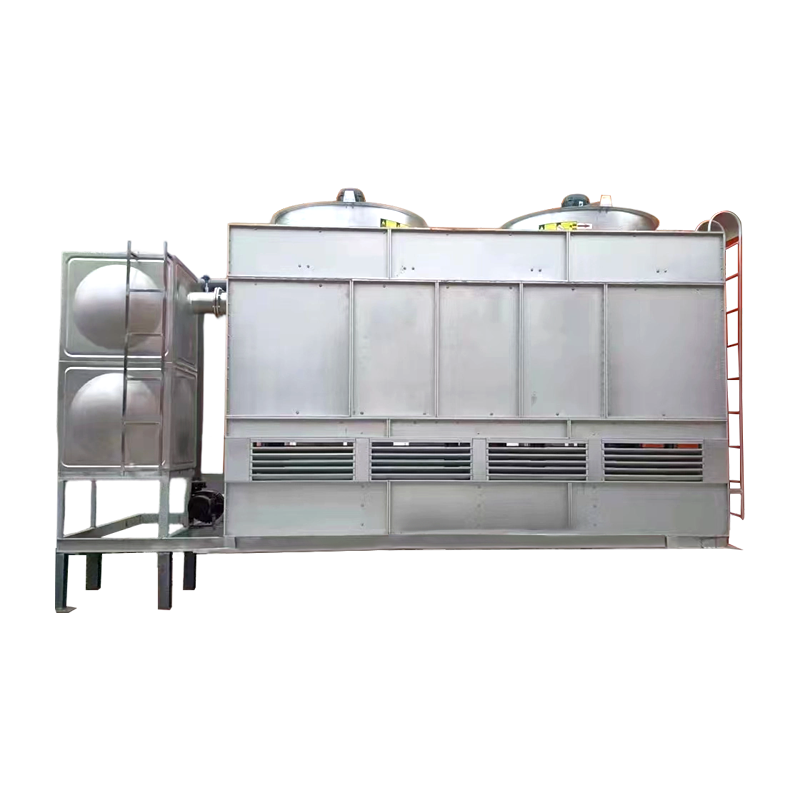 Closed Circuit Counterflow Cooling Tower (DBN Series)This compact counterflow design keeps process water clean and minimizes evaporation losses, ideal when separation and water conservation are critical in industrial cooling.View Product →
Selecting a cooling tower is not only about matching a nominal tonnage. The thermal load, entering and leaving water temperatures, local ambient wet bulb and dry bulb conditions, available footprint, noise limits and maintenance access all change the recommendation. We also look at the tower’s dead load and wind load, especially when the unit will be installed on a roof or within a larger structure.
If steel structure towers are on your list, our close look at why steel structure cooling towers can be the smarter choice explains the construction differences in more detail.
When corrosion resistance and a lighter structural weight matter, rectangular FRP composite designs like the DV series are worth serious consideration.
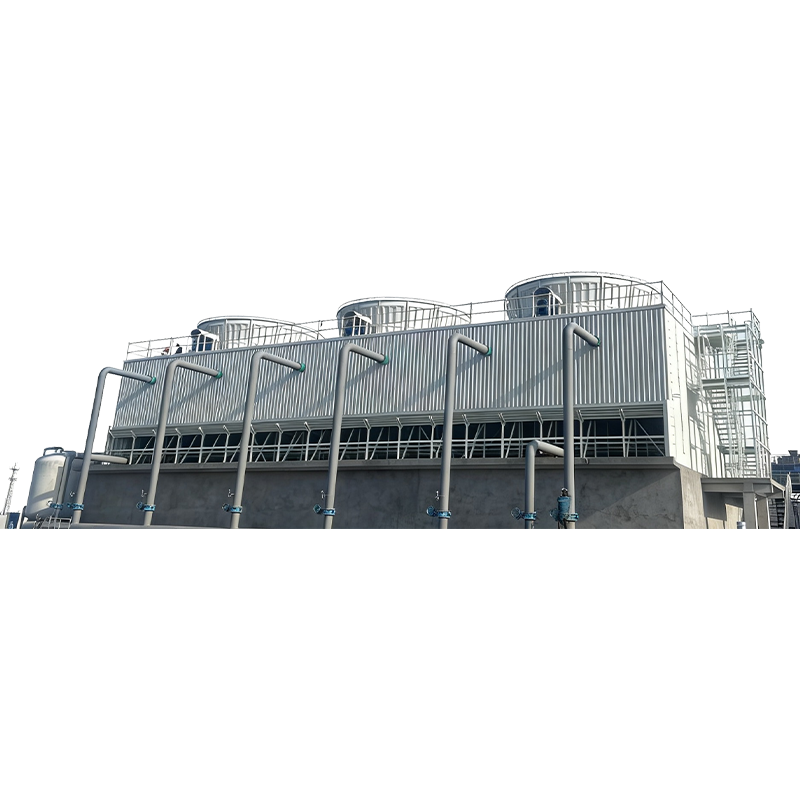 Rectangular Counterflow FRP Composite Cooling Tower (DV Series)Combining corrosion resistance with lighter weight, this FRP tower suits corrosive environments and high-lightning areas, offering flexible installation and durable performance.View Product →
Keeping the water clean matters as much as the tower itself. A cooling tower rejects heat through evaporation, but evaporation also leaves dissolved solids behind. Without blowdown and makeup water, scale would form on the fill and in the condenser loop. Biological growth, debris and corrosion can all reduce thermal performance and shorten equipment life. That is why a complete cooling tower specification should include a sensible water treatment plan, not just the mechanical equipment.
Every installation has its own balance between efficiency, space, cost and reliability. A tower that works well in a wet, coastal region may not be the best fit for an arid inland plant. A tower selected for a petrochemical expansion may need more corrosion protection than a tower in a standard HVAC application. That is why we prefer to understand the operating conditions first and then match the technology to the task.
If you are evaluating a new tower or replacing an old one, send us your operating parameters. Our engineering team can clarify the trade-offs and help you choose a cooling tower that will still be performing years after startup.
Related Products
A 2 MW chiller in a commercial building rejects roughly 700 kW of heat through its condenser water loop. That heat has to go somewhere. In many mid- to large-s...
READ MOREA plant engineer managing a 2 MW injection molding process was facing a familiar problem. The open cooling tower was letting suspended solids into the mold coo...
READ MOREWhat A Circular Cooling Tower Does A circular cooling tower removes heat from a process water system by exposing warm water to a controlled airflow, allowing a...
READ MOREIn industrial cooling systems, water is both the most essential element and the most common source of operational problems. Scale, corrosion, fouling, and micr...
READ MOREIndustrial cooling is among the largest consumers of energy and water in the global manufacturing economy. Chillers, cooling towers, heat exchangers, and proc...
READ MOREWater efficiency in cooling towers often comes down to a simple question: how much heat do you reject for every gallon of water you circulate? Cooling towers a...
READ MORE
dj@djcoolingtower.com
+86-0575-82433555 (Extension 0)
+86 130 6551 5158 Manager Zhang
