

 English
 русский
 中文简体
中文简体
If you have ever asked “how does the cooling tower work?” you are not alone. At Zhejiang Dongjie, we work with engineers and plant operators who use cooling to...
READ MORESep 11, 2026
Content
A 2 MW chiller in a commercial building rejects roughly 700 kW of heat through its condenser water loop. That heat has to go somewhere. In many mid- to large-scale installations, the answer is a cooling tower.
A cooling tower is an evaporative heat exchanger that removes waste heat from a water stream and rejects it to the atmosphere. Hot water is sprayed over a fill material while air moves through it; a small fraction of the water evaporates, absorbing latent heat and leaving the remaining water cooler. This cooled water is then circulated back to a chiller, condenser, or industrial process.
Understanding how a cooling tower works is not just an engineering exercise. It helps you specify the right equipment, avoid under-sizing, plan water treatment, and lower operating costs. This guide walks through the working principle, the main components, the differences between common tower types, and the selection factors that matter a great deal in practice.
A cooling tower’s job is to keep water temperature within a range that process equipment or chillers can tolerate. In a chilled-water system, for example, the condenser water absorbs heat from the refrigerant and must release that heat somewhere. A cooling tower provides the coldest available sink — the ambient air — and uses evaporation to push the water temperature below the dry-bulb air temperature. Without a tower, water would keep heating up and the system would eventually fail.
Industries such as power generation, petrochemicals, metallurgy, chemical processing, HVAC, and renewable energy rely on cooling towers for continuous operation. The tower is often the more visible part of the heat rejection loop, but the efficiency of the entire plant depends on how well it performs.
Although designs differ, every wet (evaporative) cooling tower follows the same basic sequence:
The amount of evaporation is typically about 1% of the circulating water flow for every 6 °C of cooling range. Makeup water is added to compensate for evaporation, drift, and blowdown.
Every component in a cooling tower affects thermal performance, maintenance, and service life. The table below summarizes the main parts and their roles.
| Component | Function |
|---|---|
| Fill (packing) | Increases water-air contact time and surface area for evaporation |
| Distribution system | Sprays or gravity-feeds water evenly over the fill |
| Drift eliminator | Removes entrained water droplets from the air discharge |
| Fan and motor | Pulls or pushes air through the tower to maintain airflow |
| Basin / sump | Collects cooled water and supplies the return pump |
| Fill supports and casing | Provide structural support and enclosure for the airflow path |
| Air inlet louvers | Reduce splash-out and help direct airflow |
Material choices matter as much as geometry. FRP (fiberglass reinforced plastic) is widely used for casings and cold-water basins because it resists corrosion and UV degradation. Steel towers are preferred where structural spans are large or the site has specific load-bearing requirements.
Cooling towers are classified by the direction of airflow relative to the falling water. In a counterflow tower, air moves upward while water falls downward. This configuration gives better heat transfer efficiency because the air leaves at the hottest and quite humid point, and the coldest water meets the driest air. Counterflow towers are generally more compact for the same duty, but they require a higher-pressure fan and are more sensitive to water distribution.
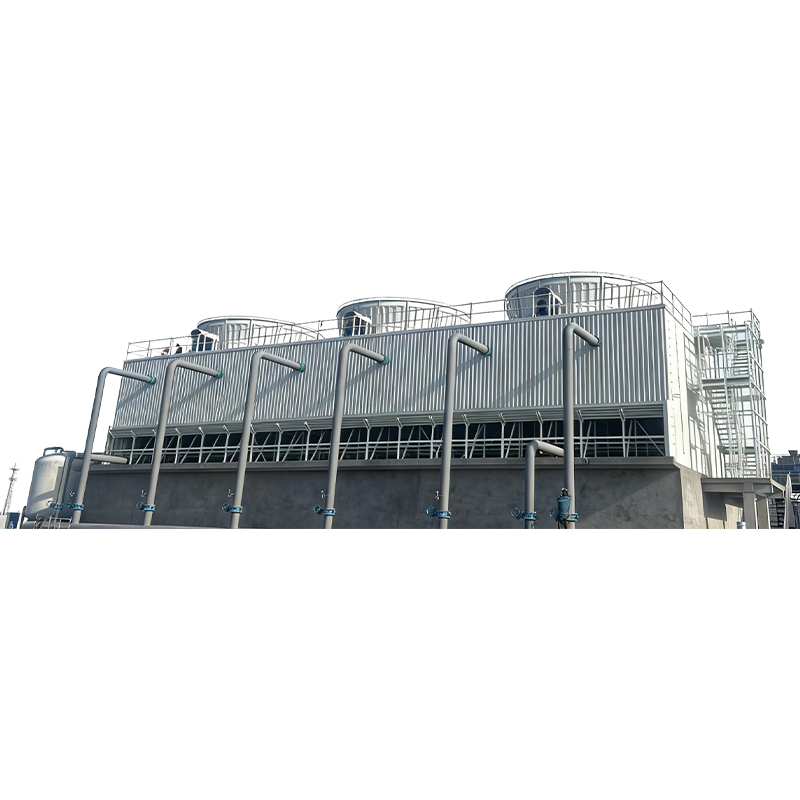
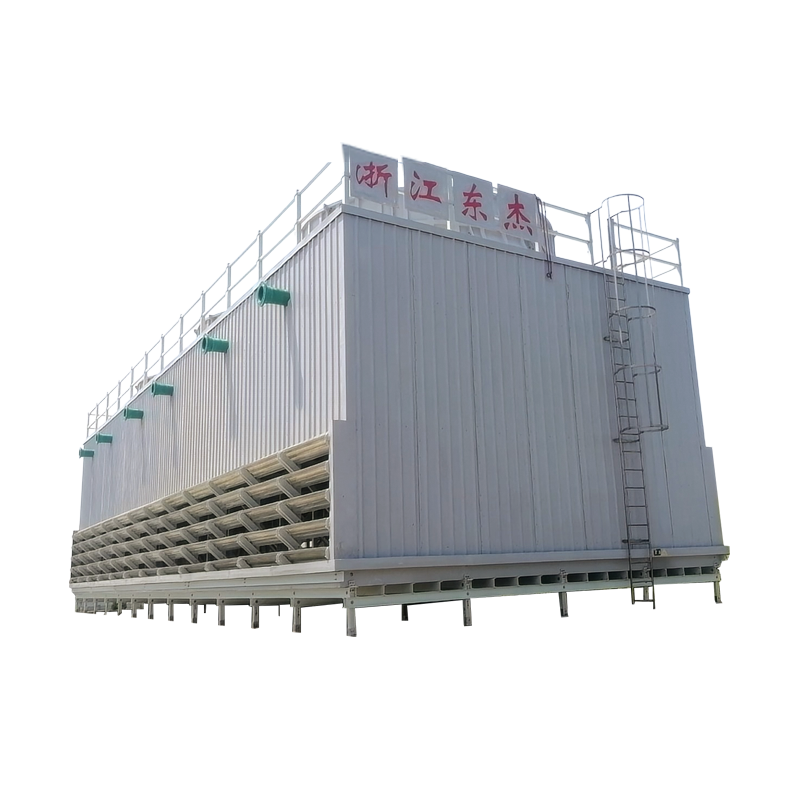
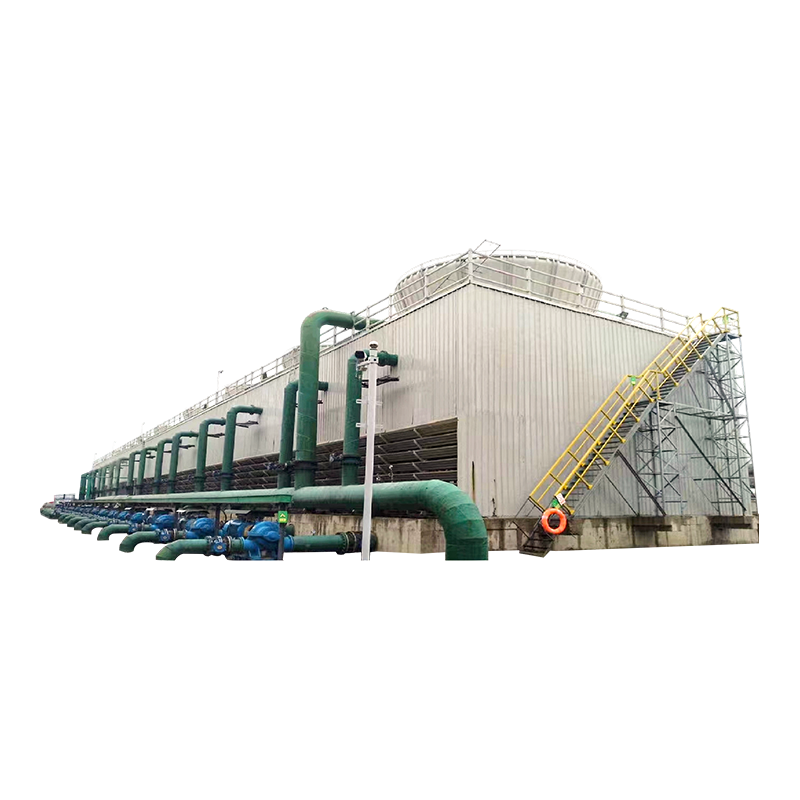
In a crossflow tower, air enters horizontally and moves perpendicular to the falling water. The water distribution is gravity-based, making it easier to inspect and clean. Crossflow towers handle high water flow rates well and are often found in large HVAC or industrial installations where maintenance access matters.
Both types achieve the same basic result, but the choice affects tower height, footprint, fan power, and how the tower behaves under varying load and weather conditions.
Natural draft towers rely on the density difference between warm humid air inside the tower and cooler outside air. They are typically very large hyperboloid structures, like those seen at power stations, and have no fans. Their advantage is low operating cost and high reliability; their disadvantage is a huge footprint and a cooling performance that depends directly on ambient air temperature and humidity.
Mechanical draft towers use fans to move air. Induced draft towers have the fan at the top, pulling air through the fill. Forced draft towers have the fan at the bottom, pushing air inward. Induced draft towers are more common because they provide uniform airflow and reduce recirculation of wet exhaust air. For many industrial and commercial applications, mechanical draft towers offer compact size, precise air control, and predictable performance across a wide range of climates.
Manufacturers classify towers not only by air/water flow but also by construction and whether the process fluid is directly exposed to air. The right choice depends on the application, the cooling water quality, and the space available. For a complete overview of configurations, you can browse the product range.
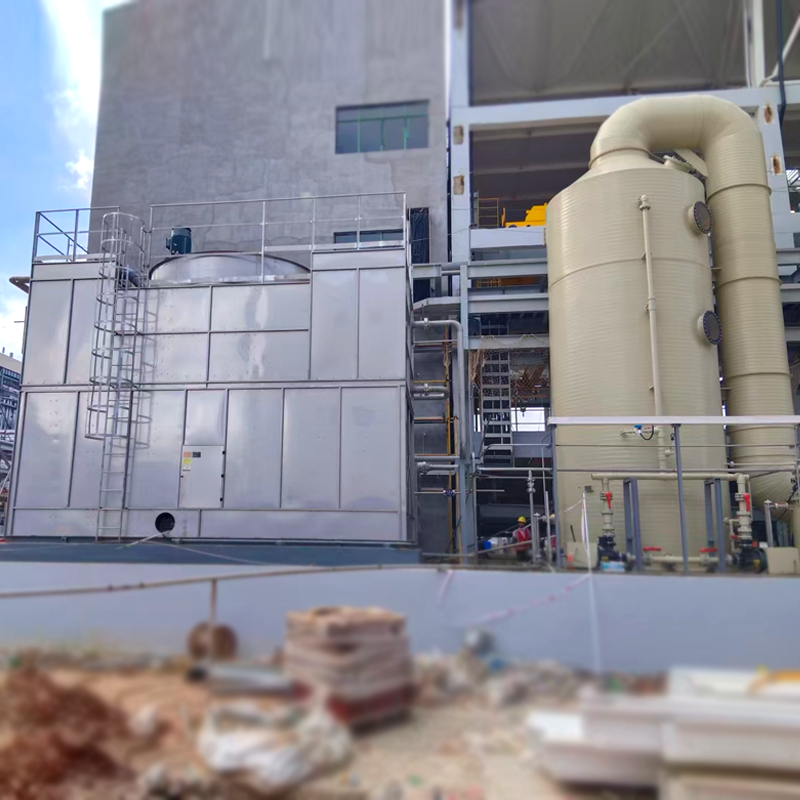
Open-circuit or wet cooling towers are a widely used type. They are simple, efficient, and cost-effective for bulk heat rejection. They are widely used in HVAC and process cooling where water quality is acceptable.
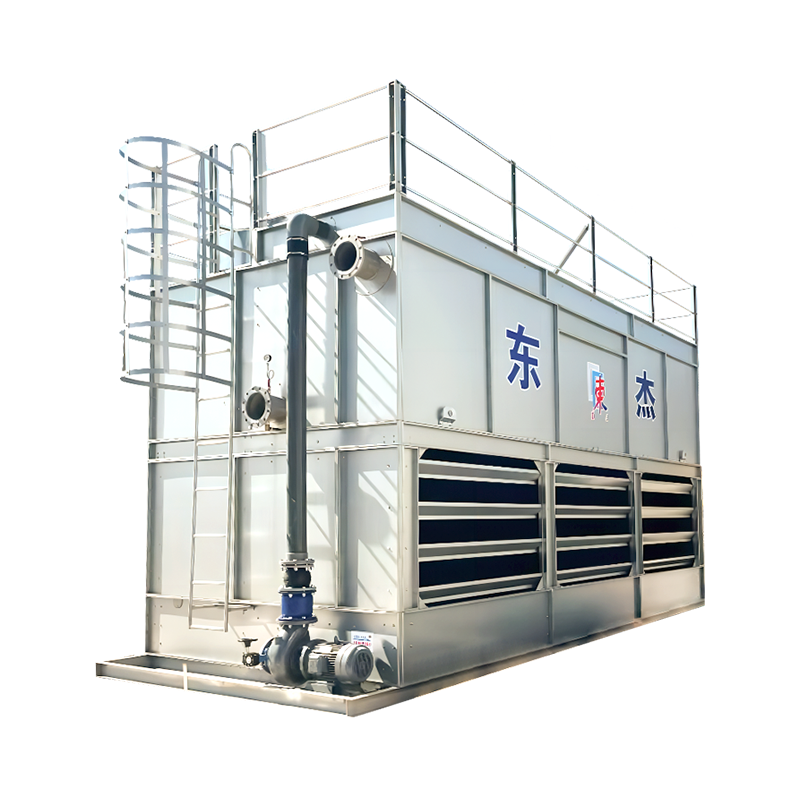
Closed-circuit cooling towers keep the process fluid inside a coil or tube bundle that is sprayed with water and exposed to air. The process fluid never contacts the atmosphere, which is critical for clean water loops, food processing, pharmaceuticals, or systems that use ethylene glycol or other sensitive fluids. Closed-circuit towers cost more initially but reduce contamination and often lower overall water use because the coil can be cleaned and the recirculating spray water is separate.
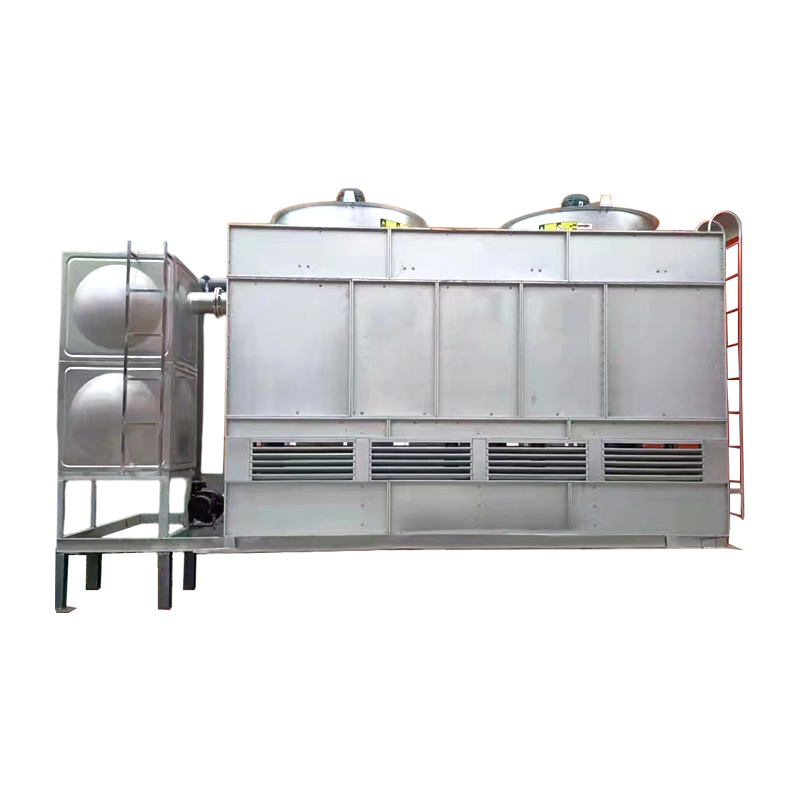 DBN Series Closed Circuit Counterflow Cooling TowerThis closed-circuit counterflow tower keeps process fluid in a sealed coil, preventing contamination for sensitive applications like food processing or glycol systems. Its compact vertical layout fits tight spaces.View Product →
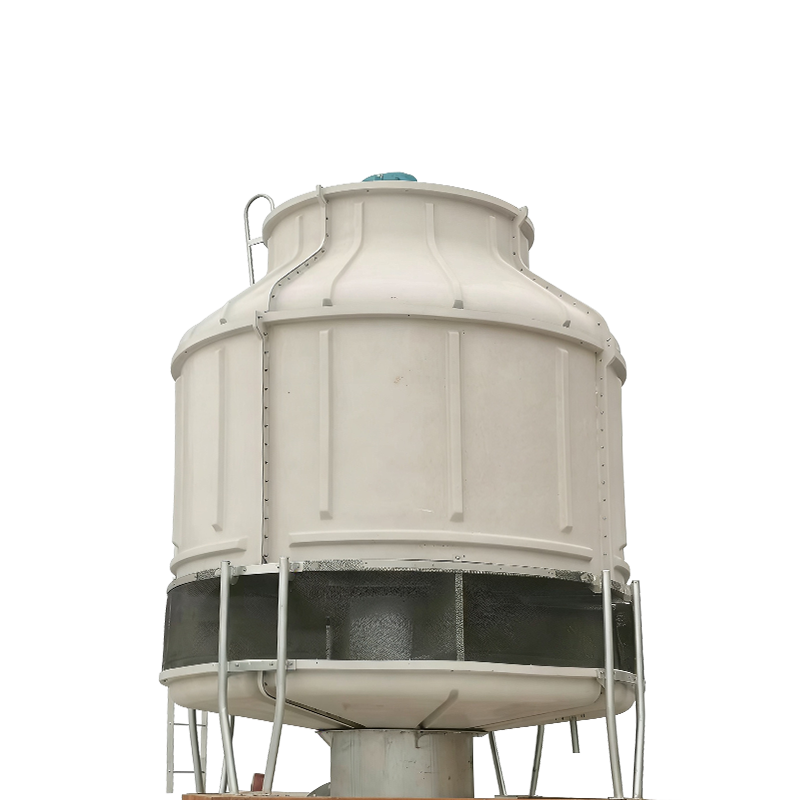
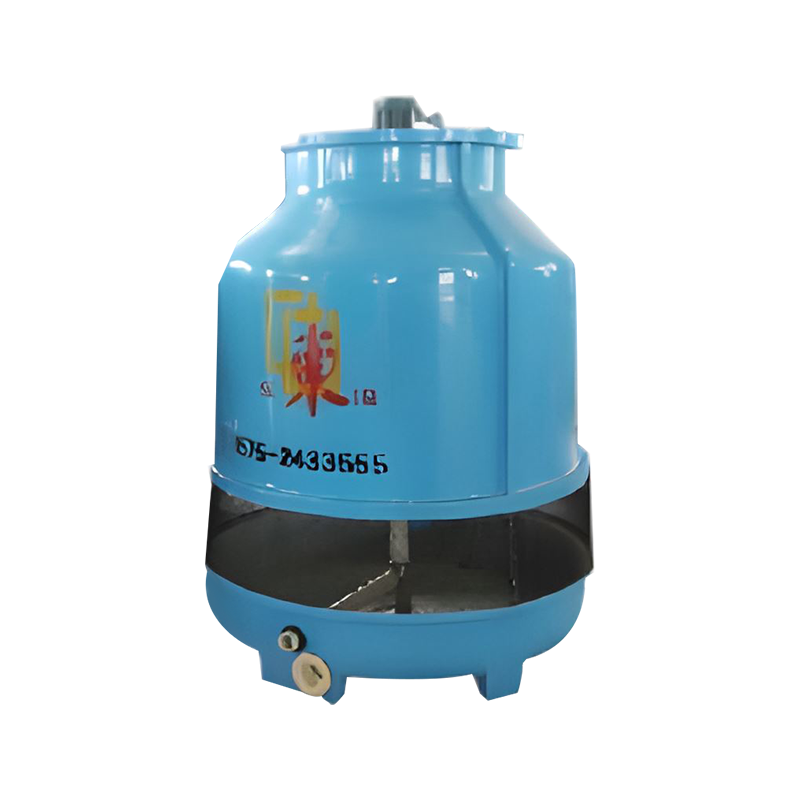
Within the open-circuit category, you can choose between circular counterflow towers and rectangular crossflow towers. Circular counterflow towers, often with FRP shells, are a common choice for small- and medium-duty industrial loads because they are easy to install and resistant to aggressive water. Their round shell reduces standing space while maintaining even airflow around the perimeter.
 BLS(II)J Series Industrial Circular Counterflow Cooling TowerAn FRP circular counterflow tower suited for small and medium industrial loads. It features a corrosion-resistant fiberglass shell, stainless steel fittings, and an automatic rotating water distribution system.View Product →
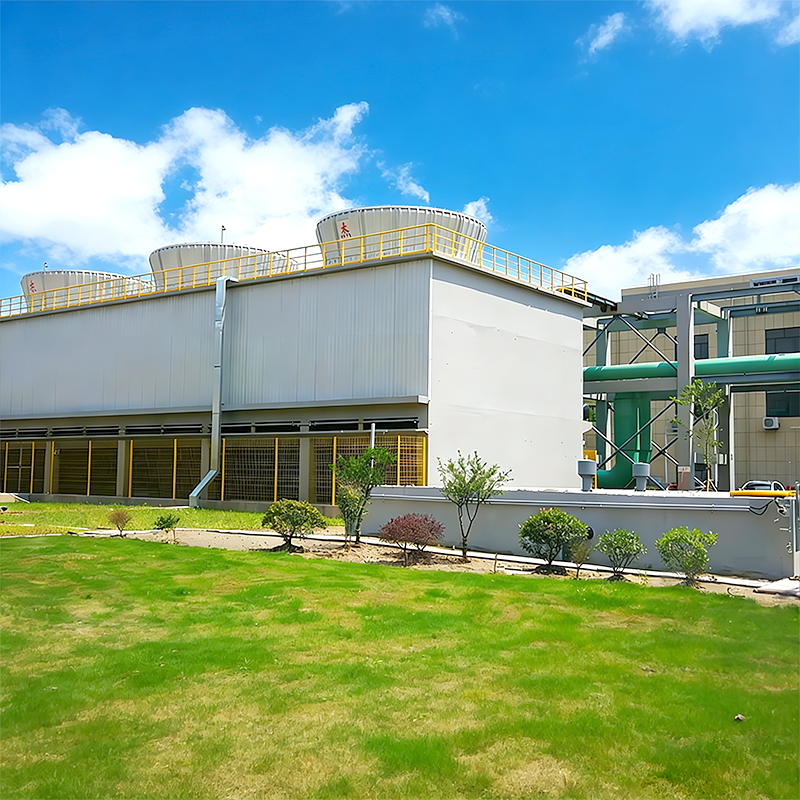
For larger or more demanding projects, steel structure cooling towers offer high structural strength and long-term durability. They are often field-erected and can be configured as counterflow or crossflow. Steel towers are typical in power plants, petrochemical plants, and large district cooling systems.
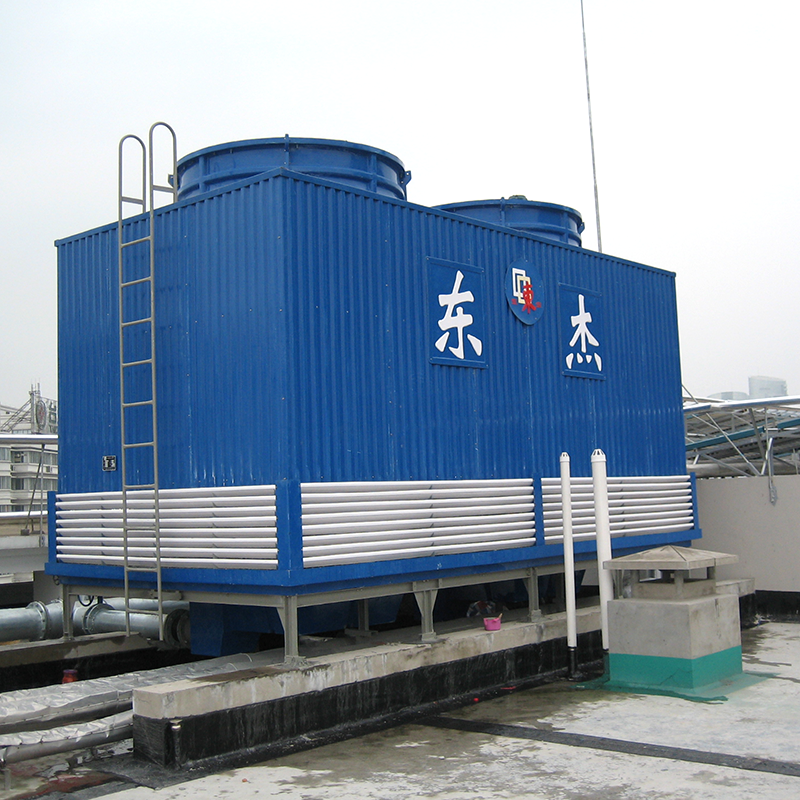 DF Series Counterflow Steel Structure Cooling TowerA field-erected steel structure counterflow tower built for large demanding projects such as power plants and petrochemical facilities. It offers high strength, corrosion protection, and efficient thermal performance.View Product →
Your own project may also consider FRP composite towers, large-scale civil towers, or hybrid-flow units depending on the required capacity and installation conditions.
Cooling tower selection is not just about the flow rate. Several thermodynamic and practical parameters determine whether a tower will meet process expectations over its life.
If you are comparing designs, pay attention to how the manufacturer measures thermal performance and what test tolerance they quote. A reliable supplier should be able to provide selection software, performance curves, and references. For a deeper look at the key technical indicators in procurement, read our article on cooling tower technical indicators.
Water treatment should also be planned from day one. Without proper chemical treatment, evaporation concentrates minerals, which may contribute to scale on the fill and increased energy consumption. Biocides are needed to control legionella and other biological growth. In cooling towers, a sound maintenance program starts with a water management plan, not an afterthought.
Cooling towers are elegantly simple devices that rely on latent heat of evaporation to reject tremendous amounts of heat from a small volume of circulating water. The working principle — hot water + air + evaporation — is straightforward, but the differences between crossflow and counterflow, open and closed circuit, and natural and mechanical draft can significantly affect thermal performance, operating cost, and reliability.
When you specify a tower, start with the wet-bulb temperature, range and approach, and the required heat load. Then decide which construction type suits your site and water quality. The right cooling tower will run efficiently for decades; the wrong one can cause chiller trips, scaling, corrosion, and costly downtime. If you are planning a new install or replacing an aging tower, take time to review performance data and supplier capabilities before making a decision.
Related Products
If you have ever asked “how does the cooling tower work?” you are not alone. At Zhejiang Dongjie, we work with engineers and plant operators who use cooling to...
READ MOREWhy Steel Structure Cooling Towers Dominate Large-Scale Industrial Cooling A Steel Structure Cooling Tower is the correct specification choice for large-scale ...
READ MOREIndustrial cooling is among the largest consumers of energy and water in the global manufacturing economy. Chillers, cooling towers, heat exchangers, and proc...
READ MOREIn industrial cooling systems, water is both the most essential element and the most common source of operational problems. Scale, corrosion, fouling, and micr...
READ MOREWhen a process line needs to hold a reactor at 5 °C, a chiller is the obvious choice. When the same plant needs to reject a large amount of waste heat from a c...
READ MOREA plant engineer managing a 2 MW injection molding process was facing a familiar problem. The open cooling tower was letting suspended solids into the mold coo...
READ MORE
dj@djcoolingtower.com
+86-0575-82433555 (Extension 0)
+86 130 6551 5158 Manager Zhang
