

 English
 русский
 中文简体
中文简体
Industrial facilities, commercial buildings, and power generation plants all share a common operational challenge, the need to efficiently remove excess heat g...
READ MORESep 04, 2026
Content
A plant engineer managing a 2 MW injection molding process was facing a familiar problem. The open cooling tower was letting suspended solids into the mold cooling circuit. The molds needed flushing every two weeks, and the temperature control was drifting by two degrees. After a switch to a counter flow closed cooling tower, the process water stayed in a sealed circuit, solids stayed out of the circuit, and the mold temperature stayed within half a degree for six months. That kind of outcome is the reason the counter flow closed cooling tower is now specified so widely in process industries.
A counter flow closed cooling tower combines the thermal performance of a counter flow air-water arrangement with a closed circuit hydraulic design. The process fluid circulates through a tube bundle inside the tower shell. Spray water is pumped to the top, falls over the coil, and air is drawn upward through the tower so the two streams move in opposite directions. Heat passes from the process fluid, through the coil wall, into the spray water film, and then into the air stream.
The critical difference from an open cooling tower is that the process fluid is never exposed to ambient air or the spray water. In an open tower, the water being cooled is in direct contact with air, and it collects dust, algae, and dissolved solids over time. In a closed circuit design, the process loop is a sealed coil, so it keeps its chemical composition, resists contamination, and can use a custom fluid such as ethylene glycol or deionized water.
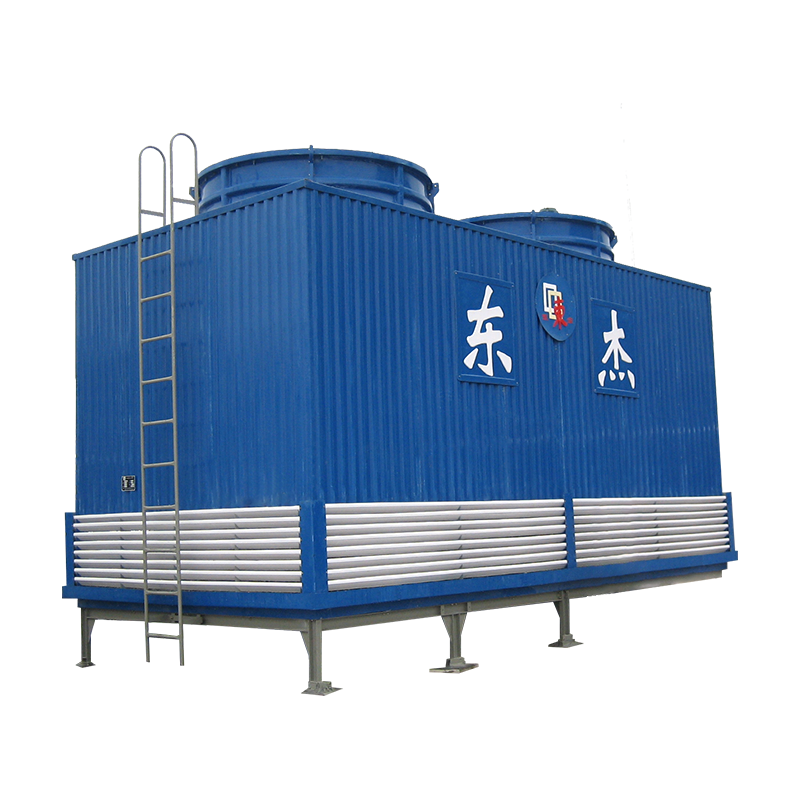
 Closed Circuit Counterflow Cooling Tower for Sealed Process CoolingDesigned to keep process fluid isolated from air and spray water, this counterflow closed circuit tower suits plants needing contamination resistance and custom fluids like glycol or deionized water.View Product →
The Dongjie DBN series is built around this counter flow closed circuit geometry. The coil is arranged in a vertical stack, the spray water header distributes water evenly over the top, and an induced draft fan pulls air from the bottom to the top through the coil. Standard models cover the range where many process cooling loops sit, and the design can be scaled to match the specific thermal duty of the plant.
The counter flow geometry provides two practical advantages in a closed circuit cooling tower.
First, the air and spray water move in opposite directions, so the coolest, driest air contacts the coolest spray water at the bottom of the coil, while the warmest, increasingly saturated air contacts the warmest spray water at the top. That distribution maintains a high temperature difference through the entire coil, which means a more uniform heat transfer rate and a smaller coil surface for the same duty.
Second, the counter flow arrangement achieves a lower approach temperature. The approach is the difference between the process fluid outlet temperature and the ambient wet bulb temperature. A small approach means you can hold chiller condenser water at 32°C when the wet bulb is 26°C, with a tight 6°C approach. The longer air-water contact path in a counter flow design makes it practical to hold this approach consistently.
In practice, a counter flow closed circuit unit is often 10% to 20% more compact than a crossflow unit of the same heat rejection. For a plant with a tight equipment area, that compactness saves valuable floor space and reduces the required base foundation.
The choice between counter flow and cross flow is not about which is universally better. It is about matching the geometry to the site. A comparison can help you see the key differences.
| Characteristic | Counter Flow Closed Tower | Cross Flow Closed Tower |
|---|---|---|
| Air direction | Upward through the coil | Horizontal across the coil |
| Tower height | Taller | Lower |
| Footprint | Smaller | Larger |
| Approach to wet bulb | Tighter | Wider |
| Coil access | Through access doors | Through side panels |
| Freeze risk in cold climates | Higher at the air inlet | Lower |
| Typical capacity per cell | Up to 6000 T | Up to 3000 T |
In general, if the project has a temperature-sensitive process fluid and the plant area is limited, the counter flow arrangement is the stronger choice. If the site has a height restriction or extremely cold winters, the crossflow design may be the easier fit. The crossflow geometry does not perform as tightly on approach, but it simplifies winterization and maintenance access.
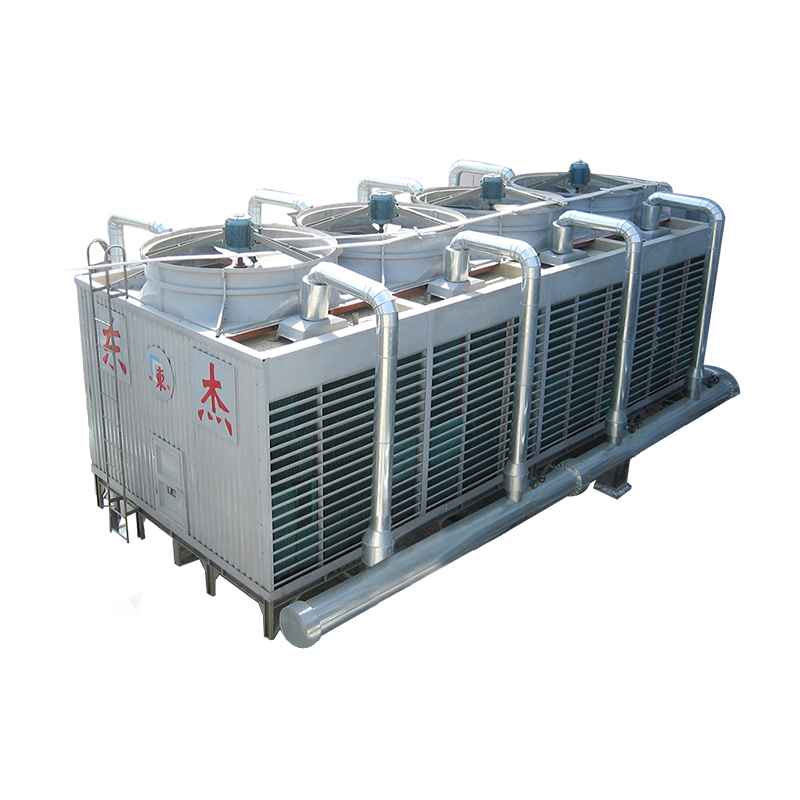
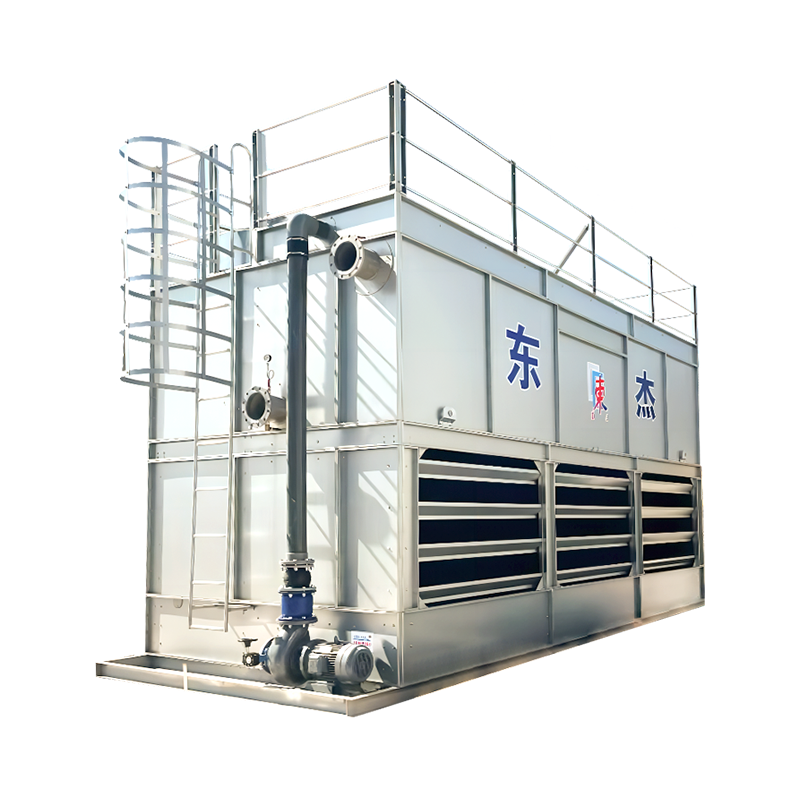 Crossflow Closed Circuit Cooling Tower for Height-Limited SitesThis crossflow design offers a shorter profile and easier maintenance access, ideal for sites with height restrictions or cold winters, while maintaining closed loop protection for process fluid.View Product →
The Dongjie DM series is a closed circuit crossflow cooling tower that addresses those specific needs. It uses the same closed coil technology as the counter flow design, but the air is drawn horizontally through the coil, which shortens the tower height and opens the coil to the side.
When you size a counter flow closed cooling tower, five indicators matter more than the brochure claims.
If you want a deeper breakdown of these variables, the guide key technical indicators to check before purchasing a cooling tower goes through the same points with more detail.
The counter flow closed cooling tower is used wherever the process fluid must stay clean and the thermal duty is continuous. Some of the common applications are:
For installations with a height limit, a hybrid flow closed cooling tower can be a good middle ground. It combines some of the thermal benefit of counter flow with the lower height and easier access of crossflow. The Dongjie DBH series is designed for that situation.
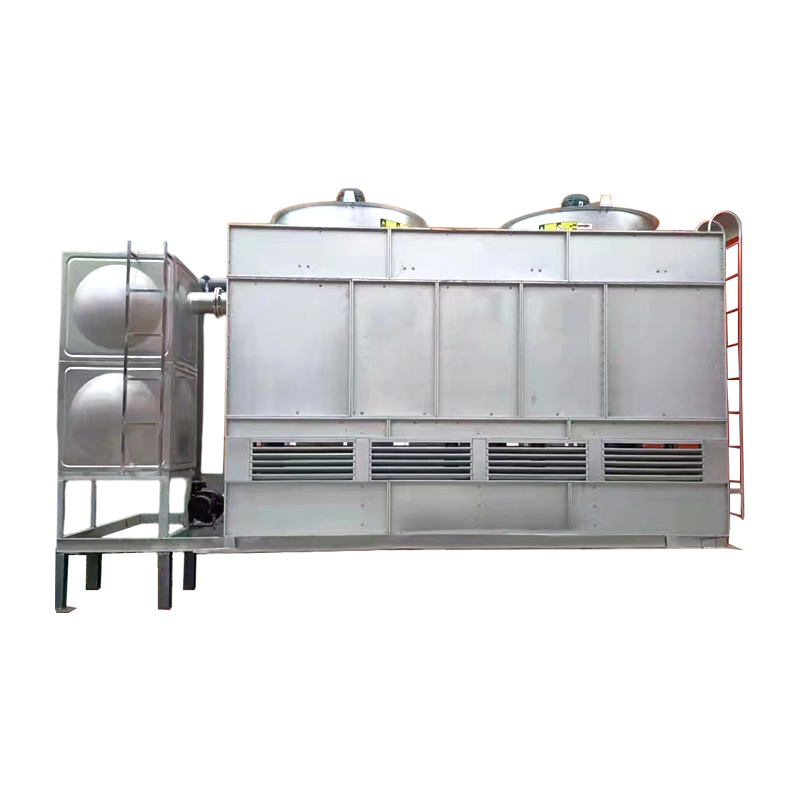
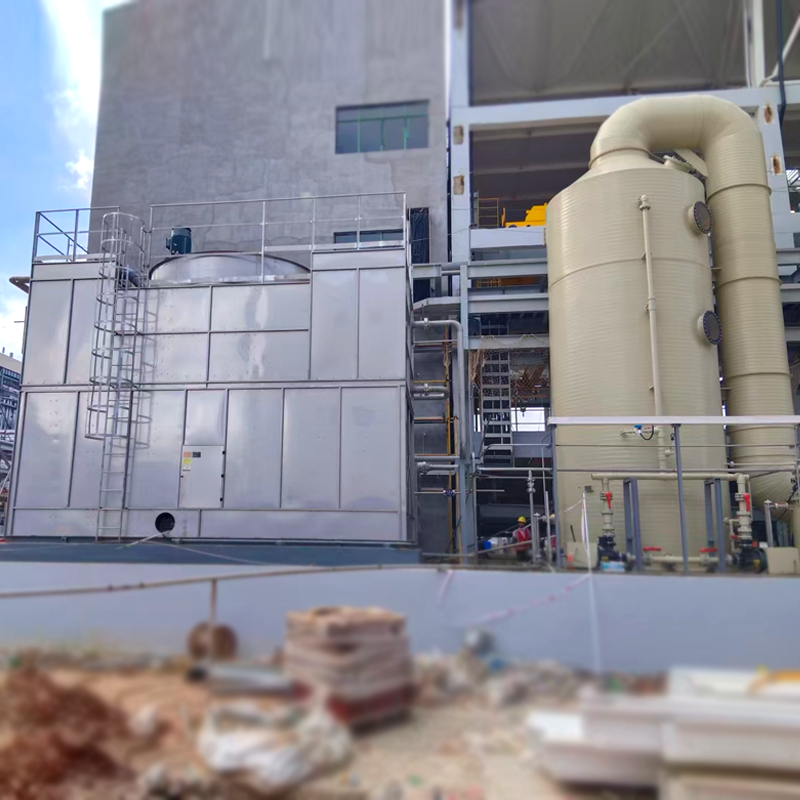 Hybrid Flow Closed Circuit Cooling Tower for Balanced PerformanceCombining counterflow thermal efficiency with crossflow convenience, the hybrid design adapts to restricted sites, handles large heat loads, and reduces scaling, making it a versatile choice for demanding conditions.View Product →
Before specifying any unit, confirm the actual heat load, the fluid type in the circuit, and the seasonal temperature range at the site. Those three inputs determine whether a counter flow, crossflow, or hybrid layout is the right starting point.
A counter flow closed cooling tower will keep its rated performance if the operator follows a few practical steps.
The supplier's ability to size the tower for your specific conditions is more important than the list of materials in the brochure. Ask for the following:
A manufacturer with in-house FRP production, a large assembly hall, and experience in overseas projects will usually deliver more consistent quality than one that assembles from bought-in parts. The same supplier that can place the coil, build the casing, and test the unit under one roof is more likely to stand behind the thermal performance.
In the end, a counter flow closed cooling tower is only as good as the design parameters it is sold against. If the wet bulb, approach, coil material, and water distribution are all specified correctly, the closed circuit tower will keep the process fluid clean and the plant running for years.
Related Products
Industrial facilities, commercial buildings, and power generation plants all share a common operational challenge, the need to efficiently remove excess heat g...
READ MOREA cooling tower rarely fails all at once. What often happens is quieter: the cold water temperature creeps up by a degree or two over a season, drift becomes v...
READ MOREIf you have ever asked “how does the cooling tower work?” you are not alone. At Zhejiang Dongjie, we work with engineers and plant operators who use cooling to...
READ MOREIn industrial cooling systems, water is both the most essential element and the most common source of operational problems. Scale, corrosion, fouling, and micr...
READ MOREIndustrial cooling accounts for nearly a fifth of global electricity consumption. As climate targets tighten and energy costs surge, the race toward high-effi...
READ MOREWhen a process line needs to hold a reactor at 5 °C, a chiller is the obvious choice. When the same plant needs to reject a large amount of waste heat from a c...
READ MORE
dj@djcoolingtower.com
+86-0575-82433555 (Extension 0)
+86 130 6551 5158 Manager Zhang
