

 English
 русский
 中文简体
中文简体
Industrial cooling is among the largest consumers of energy and water in the global manufacturing economy. Chillers, cooling towers, heat exchangers, and proc...
READ MOREMay 13, 2026
Content
A Steel Structure Cooling Tower is the correct specification choice for large-scale industrial cooling applications above 5,000 m³/h circulating water flow where the structural loads, seismic requirements, wind loading, and service life expectations exceed the practical limitations of fiberglass-reinforced plastic (FRP) or concrete alternatives. Steel Cooling Towers deliver the highest structural integrity per unit cost at the large scale demanded by power plants, petroleum refineries, steel mills, and chemical processing facilities, and they offer site-assembled modular construction that avoids the dimensional constraints of factory-built units.
The global industrial cooling tower market was valued at approximately USD 3.6 billion in 2023, with steel-frame construction accounting for the dominant share of large-capacity cooling tower installations across Asia, the Middle East, and industrial markets in the Americas. This dominance reflects the established engineering consensus that galvanized or stainless steel structural frames outperform wood, FRP, and concrete in the combination of structural capacity, repairability, and dimensional design flexibility that large industrial projects demand.
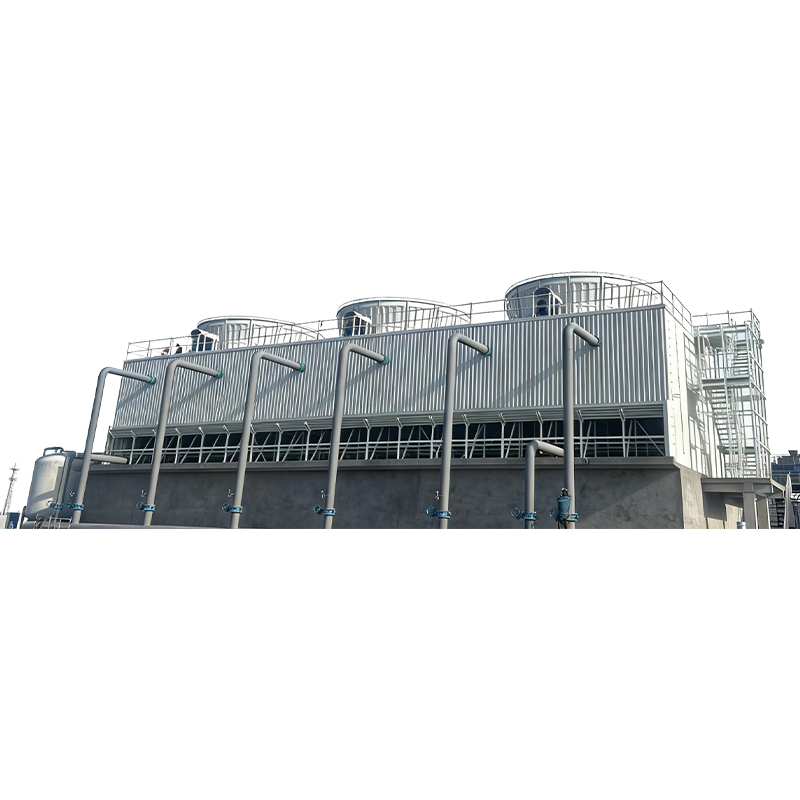
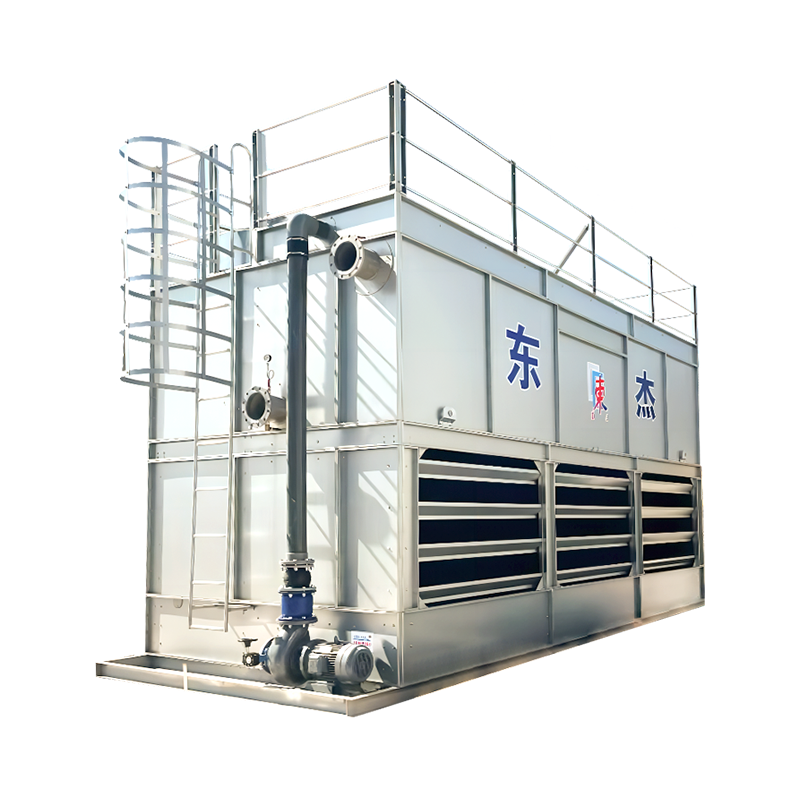
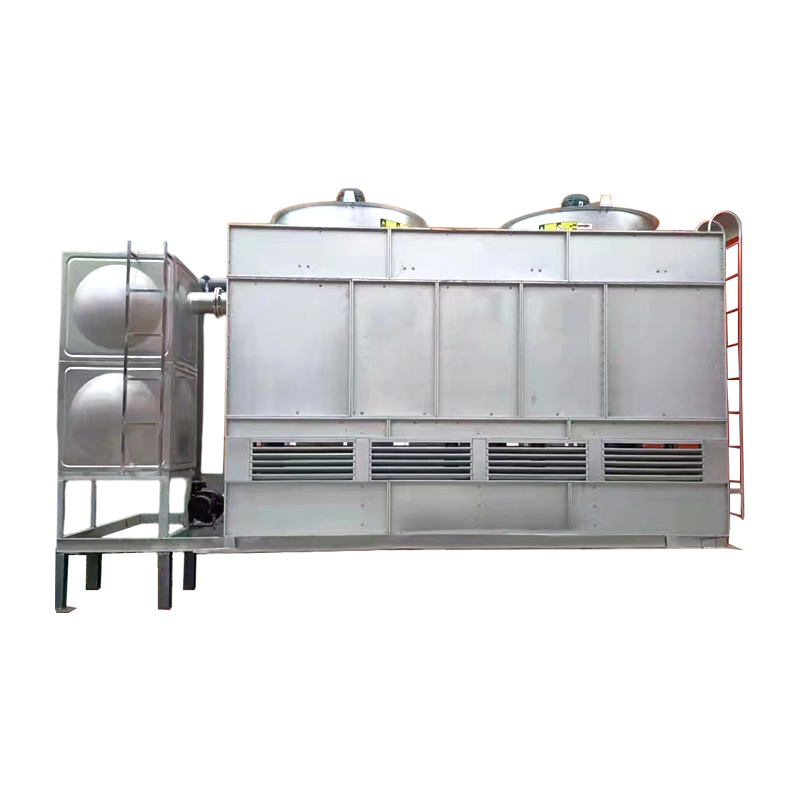
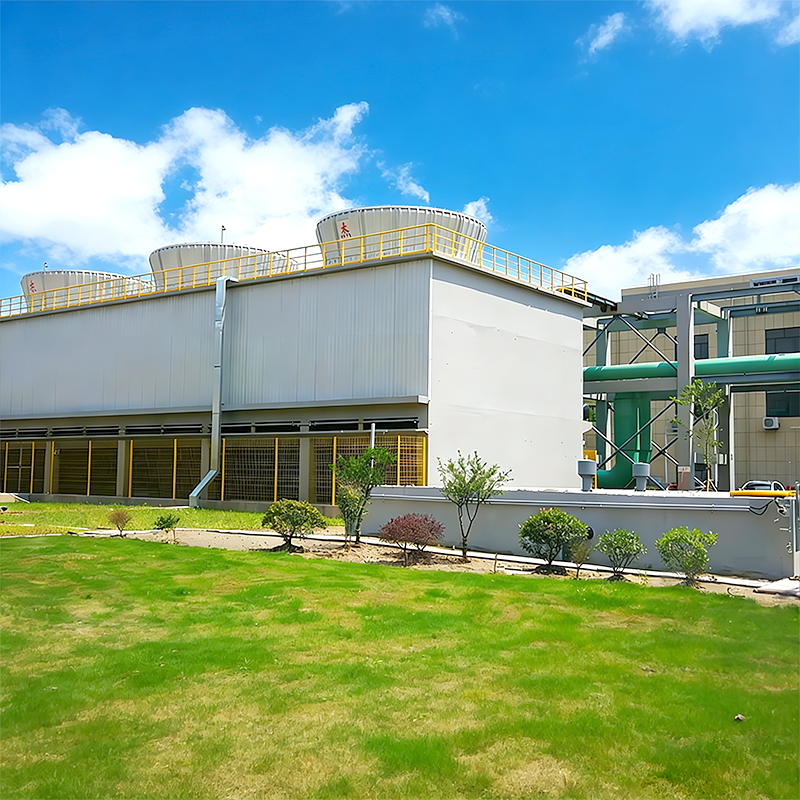
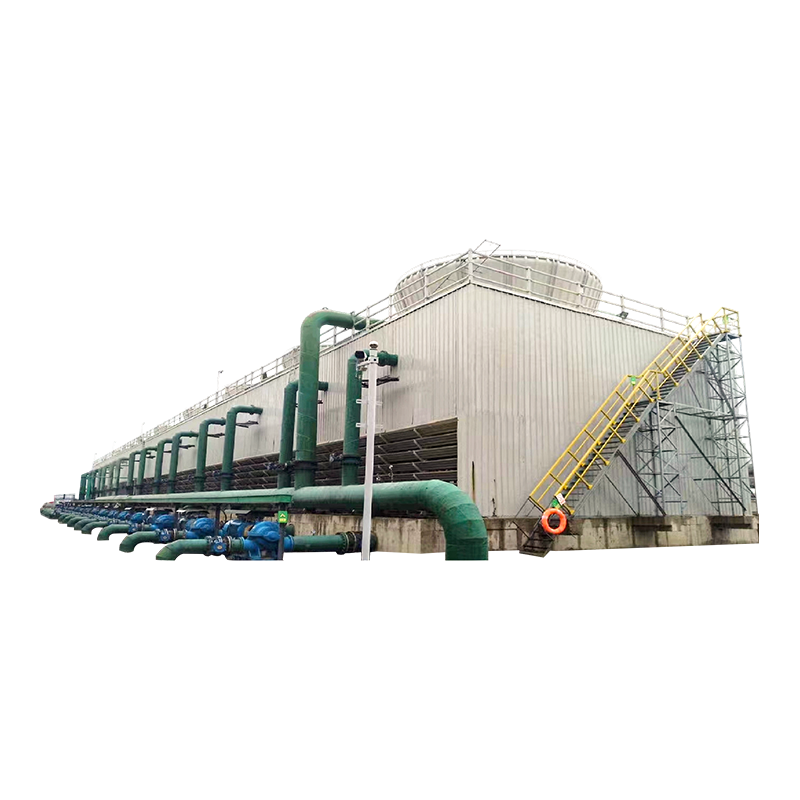
A Steel Structure Cooling Tower is an open or closed circuit heat rejection device where the structural framework supporting the tower shell, fill media, drift eliminators, fan system, and water distribution system is fabricated from structural steel sections, typically hot-dip galvanized or coated with corrosion-resistant paint systems for long-term service in the humid, chemically aggressive atmosphere generated by the evaporative cooling process.
The cooling mechanism in a Steel Structure Cooling Tower operates on evaporative heat rejection. Hot process water from the plant is pumped to the top of the tower and distributed over the fill media through a spray nozzle or trough distribution system. As water cascades down through the fill, a portion evaporates into the air stream passing through the tower. This evaporation removes latent heat from the remaining water at a rate of approximately 580 kcal per kilogram of water evaporated, cooling the circulating water by 5 to 15 degrees Celsius depending on the approach temperature and range design of the tower. The cooled water collects in the basin at the base of the tower and is returned to the process for reuse.
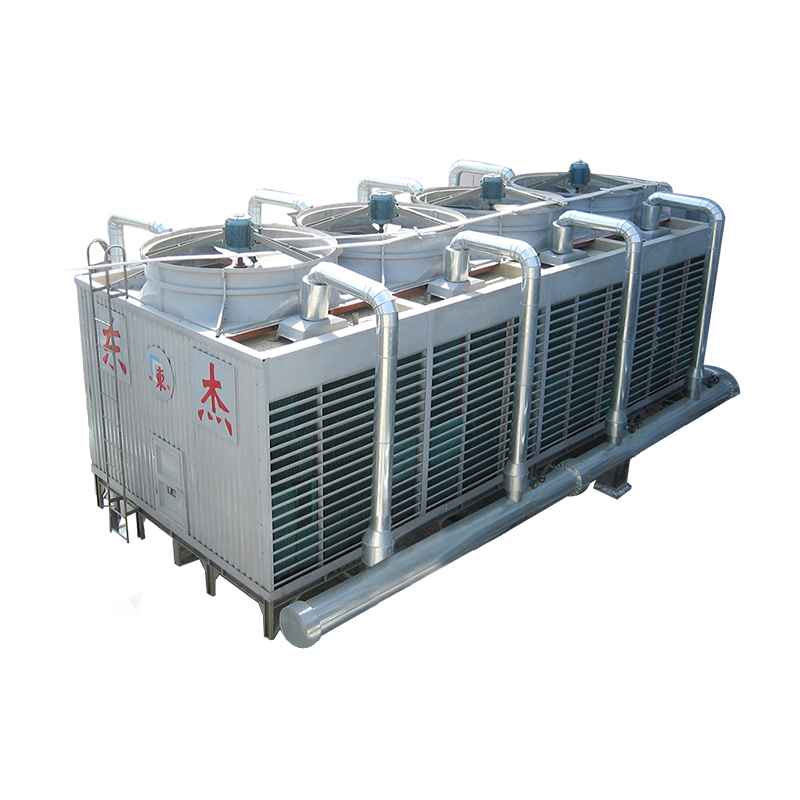
In a counterflow Steel Structure Cooling Tower, air flows vertically upward through the fill while water flows downward, creating the most thermodynamically efficient airflow arrangement. In a crossflow arrangement, air moves horizontally through the fill perpendicular to the downward flow of water, which simplifies the mechanical arrangement and reduces pressure drop through the fill but is slightly less efficient in heat transfer per unit of fill volume.
Selecting between Steel Cooling Towers, reinforced concrete natural draft towers, and FRP factory-assembled units requires evaluating seven key criteria that determine which material system delivers the best total value for a specific project. The correct choice is not universal but depends on the power capacity, site conditions, service life requirement, and maintenance philosophy of the owner.
| Criterion | Steel Structure Cooling Tower | Reinforced Concrete | FRP (Fiberglass) Tower |
|---|---|---|---|
| Maximum practical capacity | Unlimited (modular expansion) | Very large (natural draft up to 200,000 m³/h) | Limited (up to approx. 15,000 m³/h per cell) |
| Construction speed | Fast (modular site erection) | Slow (extended formwork and curing) | Very fast (factory assembled) |
| Seismic performance | Excellent (ductile steel frame absorbs energy) | Good (mass provides stability, brittle in extreme events) | Good for small units; limited for large |
| Corrosion resistance (untreated) | Moderate (requires coating or galvanizing) | Good (alkaline environment protects rebar) | Excellent (inherently non-corrosive) |
| Repairability and modification | Excellent (weldable, bolted connections) | Difficult (specialized concrete repair needed) | Moderate (FRP laminate repair possible) |
| Design flexibility | Very high (custom geometry possible) | High (formwork allows custom shape) | Low (limited to manufacturer standard sizes) |
| Typical service life | 25 to 40 years with maintenance | 40 to 60 years | 15 to 25 years |
Steel Cooling Towers are the unambiguous specification choice when three or more of the following conditions apply:
The operating environment inside and around a Steel Structure Cooling Tower is one of the most aggressively corrosive environments in industrial facilities. Circulating water containing dissolved minerals, biological treatment chemicals (biocides, scale inhibitors), and oxygen creates a corrosive electrolyte that continuously wets steel surfaces. The air stream through the tower carries water droplets laden with these chemicals to all structural steel surfaces. Corrosion of inadequately protected structural steel in cooling tower service can reduce a 6mm structural column to an unacceptable cross-section in as few as 5 to 8 years without proper coating or galvanizing protection.
The structural steel framework of a Steel Structure Cooling Tower exists to support three mechanical systems that perform the actual heat transfer function: the fill media, the water distribution system, and the fan and motor assembly. Each system must be correctly specified and integrated with the steel structure to achieve the tower's rated thermal performance and operational reliability.
Fill media (packing) provides the surface area across which water and air interact for evaporative heat transfer. The two dominant fill media types used in Steel Cooling Towers are:
The steel fill support structure must be designed for the wet fill weight plus an additional 50% impact load to account for water accumulation during shutdown and start-up conditions. Fill support beams are typically galvanized steel channels or angles at 600mm to 900mm centers spanning between the main structural columns, with stainless steel or FRP grating as the fill support surface to avoid galvanic corrosion between dissimilar metals at the fill-to-support interface.
The fan and motor assembly at the top of a Steel Structure Cooling Tower represents the highest-consequence structural challenge in the tower design. A large-diameter axial fan (diameters of 3.0m to 14.0m are common in industrial towers) generates significant dynamic loads from rotating imbalance, gyroscopic effects during start-up, and aerodynamic thrust. Dynamic loads from a 7.0m diameter fan at 120 rpm can reach 15 to 30 kN in the vertical direction and 5 to 15 kN in lateral direction under worst-case imbalance conditions per ISO 10816 vibration limits for cooling tower fans.
The steel fan deck must be designed to limit deflection under dynamic loading to prevent the fan tip clearance from the fan cylinder reducing to the point of contact. Maximum allowable fan deck deflection at the fan shaft center is typically limited to 1/500 of the fan cylinder diameter for steel deck structures in cooling tower service, which for a 7.0m fan limits center deflection to 14mm under the full combined static and dynamic load combination.
A Steel Structure Cooling Tower that is correctly maintained extends its economic service life from the nominal design life of 25 to 30 years to 35 to 50 years in many documented cases at power plants and refineries. The maintenance program must address three parallel degradation mechanisms: structural steel corrosion, mechanical component wear, and biological fouling of fill and water distribution systems.
A Steel Structure Cooling Tower is an evaporative heat rejection device whose primary load-bearing structure is fabricated from structural steel sections, typically hot-dip galvanized or coated for corrosion resistance in the wet cooling tower environment. They are most widely used in power generation (coal, gas, and nuclear power plants), petroleum refining, petrochemical and chemical processing, steel manufacturing, and large HVAC chiller plants. Any industrial process requiring rejection of more than 10 MW of heat load is a candidate for Steel Structure Cooling Tower specification, as this scale typically exceeds the practical capacity of packaged FRP alternatives.
For medium-scale industrial cooling towers in the 5,000 to 50,000 m³/h capacity range, Steel Cooling Towers typically have lower initial capital cost than equivalent-capacity reinforced concrete towers by 15% to 30%, primarily because structural steel erection is faster and requires less formwork, labor, and concrete batching plant infrastructure. For very large natural draft towers above 50,000 m³/h, reinforced concrete construction is often more economical per unit of cooling capacity because the hyperbolic concrete shell of a natural draft tower eliminates the fan and motor capital and operating cost entirely, relying on thermal buoyancy for air circulation.
The design service life of a Steel Structure Cooling Tower is typically 25 to 35 years for the structural steel framework with appropriate initial corrosion protection and a structured maintenance program. Individual components have different replacement cycles: fill media requires replacement every 10 to 20 years depending on water quality, fan blades every 15 to 25 years depending on material (FRP blades outlast aluminum), and mechanical drive components (gearboxes, motors, bearings) on condition-based maintenance programs typically requiring major overhaul every 10 to 15 years. With major component replacement over its life, a well-maintained Steel Structure Cooling Tower can remain operational for 40 to 50 years.
Primary structural members in Steel Cooling Towers use Q345B (China standard) or S355JR (European standard) structural steel with a yield strength of 345 to 355 MPa, providing adequate structural capacity at practical section sizes. For water-contact components in the basin and splash zone, 316L stainless steel or epoxy-coated carbon steel is used to resist the combined chloride and oxygen attack of recirculating cooling water. Steel grade selection matters because under-specification of steel corrosion protection is the most common cause of premature structural failure in cooling towers, with inadequately protected carbon steel in the splash zone losing 0.1 to 0.3 mm per year of wall thickness even with chemical water treatment programs.
A comprehensive inspection program for Steel Cooling Towers should include: annual visual inspection of all structural members with ultrasonic thickness measurement in the splash zone, six-monthly vibration analysis of rotating mechanical equipment, biennial professional engineering assessment including structural load recalculation if any modifications have been made, and a full structural condition survey every 5 to 7 years including non-destructive testing (NDT) of critical weld connections. Annual inspection records should document coating condition ratings per ISO 4628, structural member thickness measurements, and any observations of distortion, cracking, or unusual corrosion patterns that require engineering review before the next inspection cycle.
In a counterflow Steel Structure Cooling Tower, air flows vertically upward through the fill while water falls vertically downward, so air and water move in opposite directions and the coldest water contacts the coldest incoming air at the bottom of the fill, producing the most thermodynamically efficient heat transfer arrangement. In a crossflow Steel Structure Cooling Tower, air flows horizontally through the fill while water falls vertically downward, so the air and water paths are perpendicular. Crossflow towers have lower fan energy consumption for the same air volume because the horizontal air path through the fill has lower resistance than the vertical path in counterflow, but counterflow towers achieve better thermal performance for the same fill volume and are the preferred choice in applications where cooling range and approach temperature are critical design parameters.
Yes, expansion is one of the primary advantages of Steel Cooling Towers over concrete alternatives. A Steel Structure Cooling Tower can be expanded by adding additional bays to an existing multi-bay structure, by installing additional cells in series or parallel with existing cells, or by increasing the fan diameter or speed within the existing structural envelope if the structural capacity allows. Expansion requires engineering analysis to verify that existing foundation elements, structural connections, and the basin can accommodate the additional loads and flow rates of the expanded configuration. Most well-designed Steel Cooling Towers include a 20% to 30% structural reserve in the original design specifically to facilitate future capacity expansion without requiring structural reinforcement of the original frame.
In coastal environments where airborne chloride concentrations accelerate steel corrosion, Steel Cooling Tower corrosion protection requires upgrading from standard hot-dip galvanizing to a combination system: hot-dip galvanized base plus a two-component epoxy sealer coat at 80 to 100 microns DFT, plus a polyurethane topcoat at 60 to 80 microns DFT. This duplex coating system (galvanizing plus paint) extends corrosion protection to 40 to 50 years in coastal environments where galvanizing alone would require recoating within 10 to 15 years. For the most aggressive coastal locations within 500 meters of the sea, structural members in the wettest zones should be upgraded to 316 stainless steel or FRP pultruded profiles for the small number of highly vulnerable members to eliminate the maintenance burden of periodic recoating in difficult access locations.
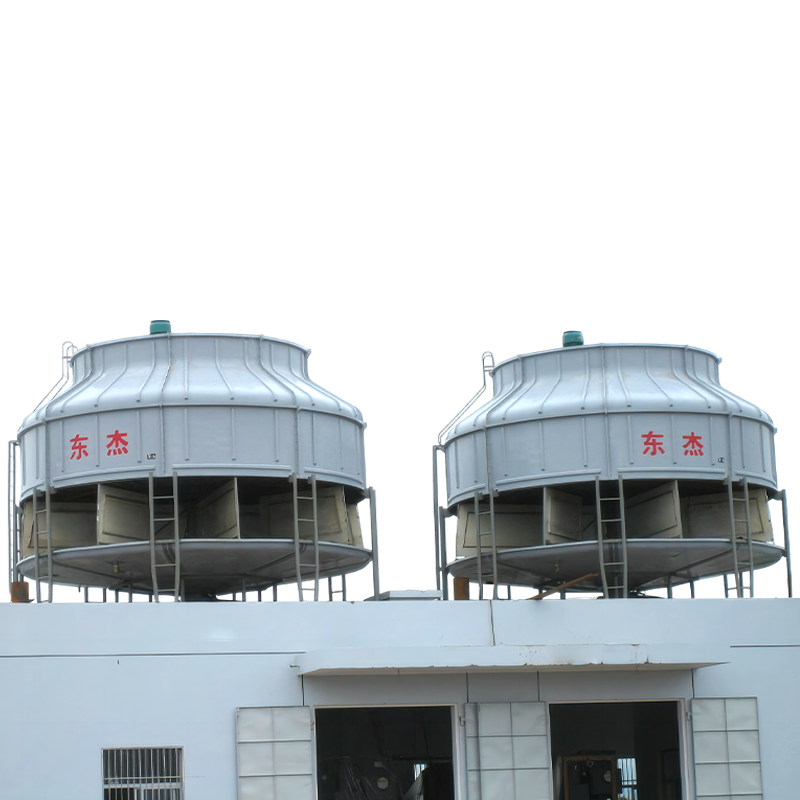
In an induced draft Steel Cooling Tower, the axial fan is located at the top of the tower in the exit air stream, drawing air up through the fill from inlets at the base of the tower. The fan operates in the exit air stream at reduced temperature and lower air density, which reduces the fan power required for a given air volume compared to forced draft. In a forced draft Steel Cooling Tower, the fan is located at the air inlet at the base of the tower and pushes air through the fill. Forced draft allows the fan and mechanical drive to be located at ground level for easier maintenance access but creates a pressurized air plenum inside the tower that increases structural loading on the tower casing. Induced draft is the dominant arrangement for large industrial Steel Cooling Towers because the top-mounted fan minimizes recirculation of discharge air back into the tower inlet, which would reduce thermal performance, and provides better natural draft effect when the fan is not operating.
Steel Cooling Towers in high seismic zones are designed with moment-resisting steel frames or concentrically braced frames that absorb earthquake energy through controlled ductile deformation without collapse. The ductility of structural steel (elongation at fracture of 20% to 25% for standard structural grades) allows the steel frame to absorb seismic energy that would crack or collapse a concrete structure of equivalent stiffness. For high wind environments, additional wind bracing in both principal directions, heavier column base plate and anchor bolt connections, and increased wall casing thickness to resist direct wind pressure are specified based on the site-specific wind speed from the applicable local or international design standard. A Steel Structure Cooling Tower in a typhoon or hurricane zone (design wind speed 60 to 80 m/s) requires approximately 40% more structural steel than an equivalent tower in a standard wind zone (design wind speed 30 to 40 m/s), which is reflected in the higher unit cost per m³/h of cooling capacity for coastal high-wind site specifications.
Related Products
Industrial cooling is among the largest consumers of energy and water in the global manufacturing economy. Chillers, cooling towers, heat exchangers, and proc...
READ MOREIndustrial facilities that rely on continuous thermal processes, from power generation to chemical manufacturing to large scale HVAC systems, depend heavily on...
READ MOREStructural Frame Material Sets the Baseline for Service Life A steel structure cooling tower uses a galvanized or coated steel frame in place of the wood or FR...
READ MOREIn industrial cooling systems, water is both the most essential element and the most common source of operational problems. Scale, corrosion, fouling, and micr...
READ MORESteel Structure Cooling Towers Outperform Traditional Concrete in Modern Industrial Applications Steel structure cooling towers are the preferred choice for mo...
READ MOREAs global industrial output intensifies and sustainability mandates tighten across every major manufacturing sector, upgrading modern industrial steel structu...
READ MORE
dj@djcoolingtower.com
+86-0575-82433555 (Extension 0)
+86 130 6551 5158 Manager Zhang
