

 English
 русский
 中文简体
中文简体
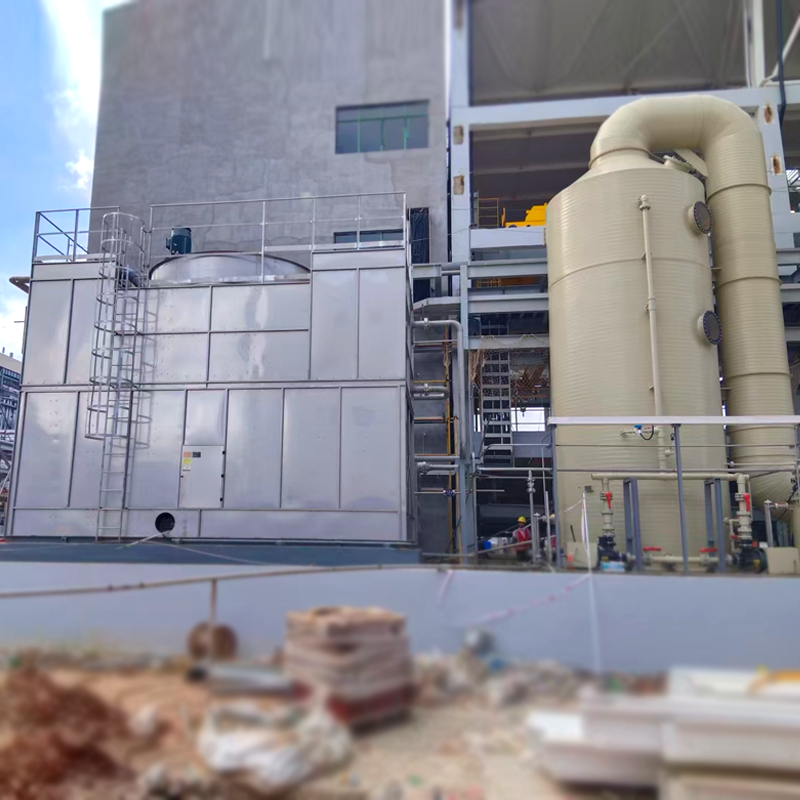
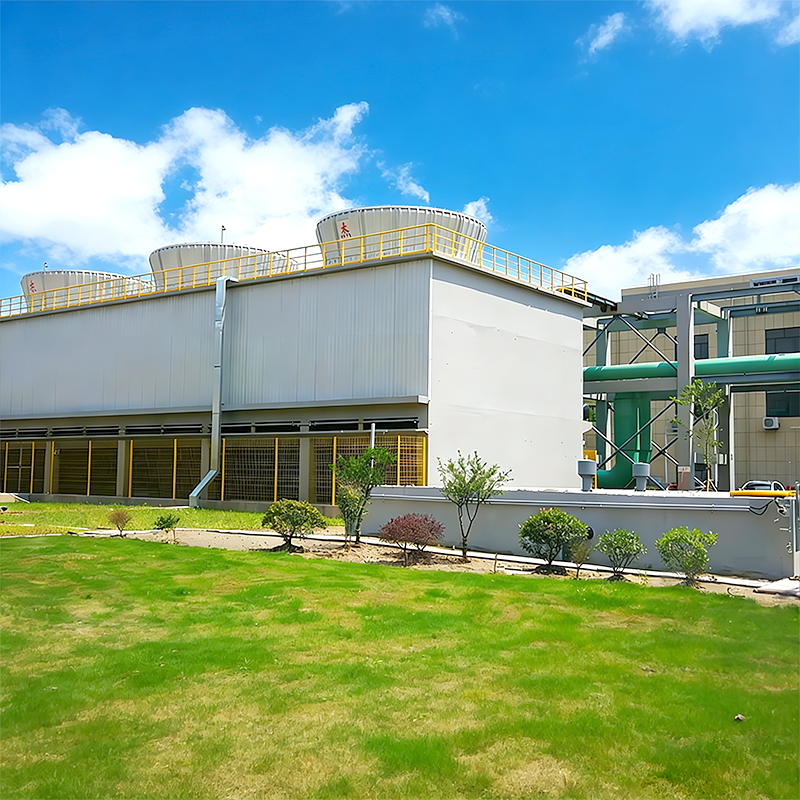
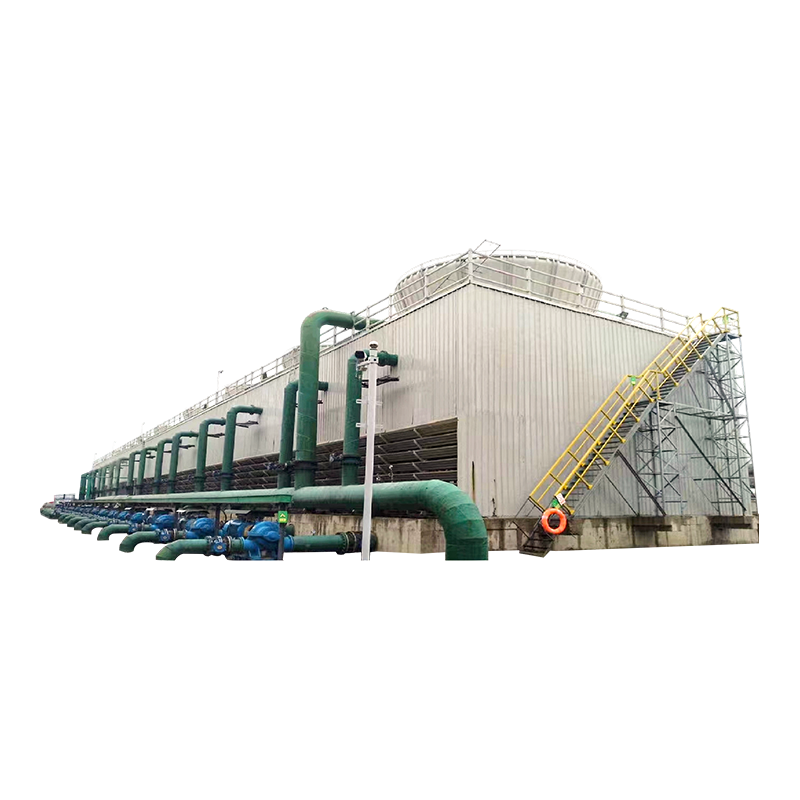
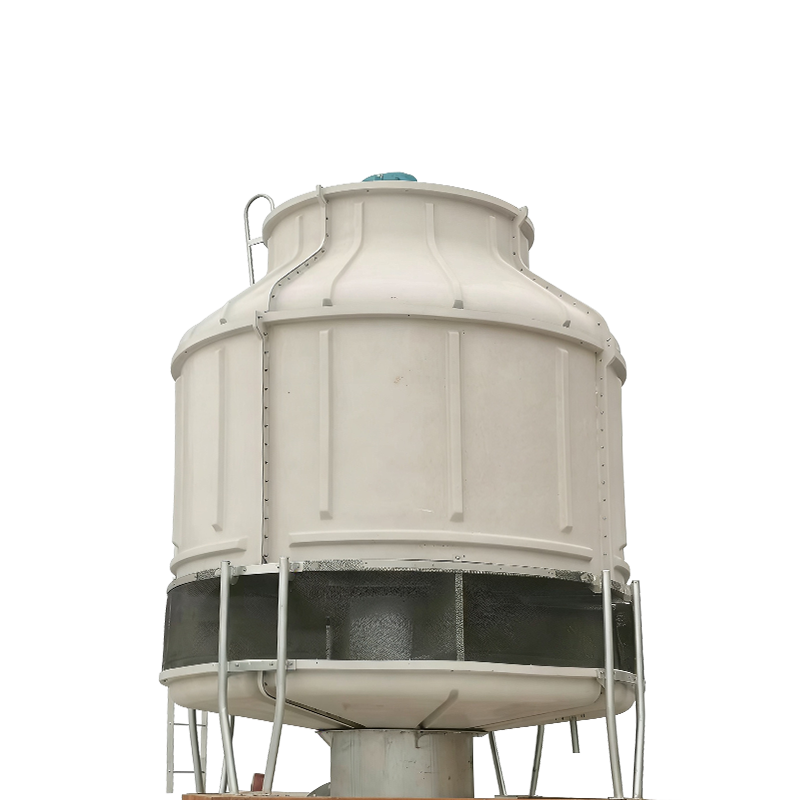
The core difference between FRP (Fiberglass Reinforced Plastic) and concrete cooling towers comes down to weight, lifespan, and cost structure. FRP towers are ...
READ MOREJul 24, 2026
Content
An FRP cooling tower is an evaporative heat rejection unit whose structural panels, casing, and often its fan stack and fill support frame are molded from fiberglass reinforced plastic rather than galvanized steel, stainless steel, or treated timber. The core function stays similar to any cooling tower: warm process water is sprayed or distributed over a fill media while air is drawn or pushed through, carrying away heat through evaporation before the cooled water returns to the plant. What changes is the shell material, and that single substitution reshapes several practical aspects of how the unit performs over its service life.
Composite construction uses layers of glass fiber strands bonded together with a polyester or vinyl ester resin matrix, then cured under heat or through a chemical hardening process into rigid panels. This layered composite structure is why fiberglass units can weigh up to 60 percent less than a comparable steel tower while still meeting similar structural load requirements, since the fiber reinforcement carries tensile stress in a way that doesn't depend on thick metal cross-sections.
Reduced structural weight isn't just a manufacturing footnote; it changes what a facility needs to prepare before a tower ever arrives on site. Rooftop installations, common in dense industrial parks or retrofit projects where ground space is limited, often face strict load limits on existing structural framing. A composite tower's lighter mass can mean the difference between needing costly structural reinforcement and simply setting the unit on an existing rooftop platform.
The strength-to-weight ratio also comes from how the fiber layers are oriented during molding, typically using chopped strand mat combined with woven roving fabric to resist stress from multiple directions at once. This layered approach gives the panels rigidity that stands up to the mechanical demands of the tower's own fans, water load, and structural framing without requiring the thick, heavy sections that steel construction typically calls for.
Cooling towers, particularly larger induced-draft units, present a fairly tall, wide profile that catches wind and must also withstand ground movement during seismic events. Composite structures respond to these dynamic forces differently than rigid steel frames, since the fiberglass matrix has a degree of flexibility that allows it to absorb and dissipate sudden loads rather than transferring stress directly through a stiff joint.
Panel-to-panel connections in a carefully engineered fiberglass tower typically rely on bolted flanges reinforced with additional laminate at stress points, spreading load across a wider area rather than concentrating it at a single weld seam the way welded steel joints often do. This detail matters in regions prone to earthquakes or high wind events, where a tower's ability to flex slightly without cracking or losing structural integrity can be a deciding factor in whether it survives a severe weather event intact.
Cooling water circuits are often demanding on structural materials. Dissolved minerals, chlorine or bromine-based biocides used to control algae and bacteria, and the constant cycle of wetting and drying all accelerate corrosion in metal components over time. Fiberglass reinforced plastic doesn't rust or oxidize the way galvanized or stainless steel eventually can, since the resin matrix forms a continuous, non-metallic barrier that stays largely inert against typical water treatment compounds.
| Material | Corrosion Behavior | Typical Service Life |
|---|---|---|
| Galvanized steel | Coating wears over time, base metal corrodes | 10 to 15 years |
| Stainless steel | Resistant but vulnerable to chloride pitting | 15 to 25 years |
| Fiberglass reinforced plastic | Non-reactive, no rust or pitting | 20 to 30+ years |
This resistance is particularly valuable in coastal facilities or plants using aggressive water treatment chemistries, where salt-laden air or higher biocide concentrations tend to shorten the lifespan of metal components faster than in a typical inland industrial setting.
Fiberglass composite naturally acts as a thermal and, notably, an electrical insulator, which brings a couple of practical advantages beyond durability alone. Because the shell doesn't conduct heat as readily as bare metal, panel surfaces run cooler to the touch and reduce unwanted heat transfer between the tower's internal warm water zones and its external casing, helping the unit maintain more consistent internal conditions across varying ambient temperatures.
The non-conductive nature of the material also reduces certain electrical hazard concerns around the tower's fan motors and wiring, since a fiberglass structure won't carry stray current the way a metal frame potentially could if grounding wasn't properly maintained. Combined with its resistance to condensation-related surface issues, this insulation characteristic supports more stable operation across seasonal temperature swings.
Routine upkeep on a cooling tower usually revolves around inspecting for corrosion, repainting exposed metal surfaces, and replacing sections weakened by rust or rot. Fiberglass towers largely sidestep the repainting cycle, since color and surface finish are typically integrated into the resin during panel manufacturing rather than applied as a separate coating that wears away with weathering and UV exposure.
Panel repairs, when needed, generally involve patching with additional fiberglass cloth and resin rather than cutting out and welding in new metal sections, a process that can often be completed without specialized welding equipment or hot work permits, which matters in facilities where hot work near flammable materials requires extensive safety clearance.
Molding fiberglass panels into curved shells, custom louver profiles, or integrated structural ribs is comparatively straightforward using techniques such as hand lay-up, spray-up, or pultrusion, depending on the part's complexity and production volume. This processing flexibility allows manufacturers to shape components, from the air inlet louvers to the fan stack housing, into aerodynamic profiles that support airflow efficiency, something considerably harder to achieve economically with sheet metal forming or wood construction.
Because molds can be adjusted relatively quickly compared to retooling metal stamping equipment, custom tower dimensions and specialized configurations, such as units built for tight rooftop footprints or unusual water flow requirements, can be produced without the extensive tooling investment that metal fabrication would typically demand.
Related Products
The core difference between FRP (Fiberglass Reinforced Plastic) and concrete cooling towers comes down to weight, lifespan, and cost structure. FRP towers are ...
READ MOREWhen purchasing an FRP (Fiber Reinforced Plastic) Composite Cooling Tower, the most critical technical indicators to evaluate are: thermal performance (cooling...
READ MOREIndustrial facilities, commercial buildings, and power generation plants all share a common operational challenge, the need to efficiently remove excess heat g...
READ MOREProduct structure features · Attractive in appearance The size is small, the height is low, the weight is light, and it has the diversity of space layout. · Adv...
READ MOREA cooling tower rarely fails all at once. What often happens is quieter: the cold water temperature creeps up by a degree or two over a season, drift becomes v...
READ MORECooling towers are essential to heat rejection in industrial plants and HVAC systems, but they are also central to the conversation about Legionnaires’ disease...
READ MORE
dj@djcoolingtower.com
+86-0575-82433555 (Extension 0)
+86 130 6551 5158 Manager Zhang
