

 English
 русский
 中文简体
中文简体
Industrial facilities, commercial buildings, and power generation plants all share a common operational challenge, the need to efficiently remove excess heat g...
READ MOREMay 20, 2026
Content
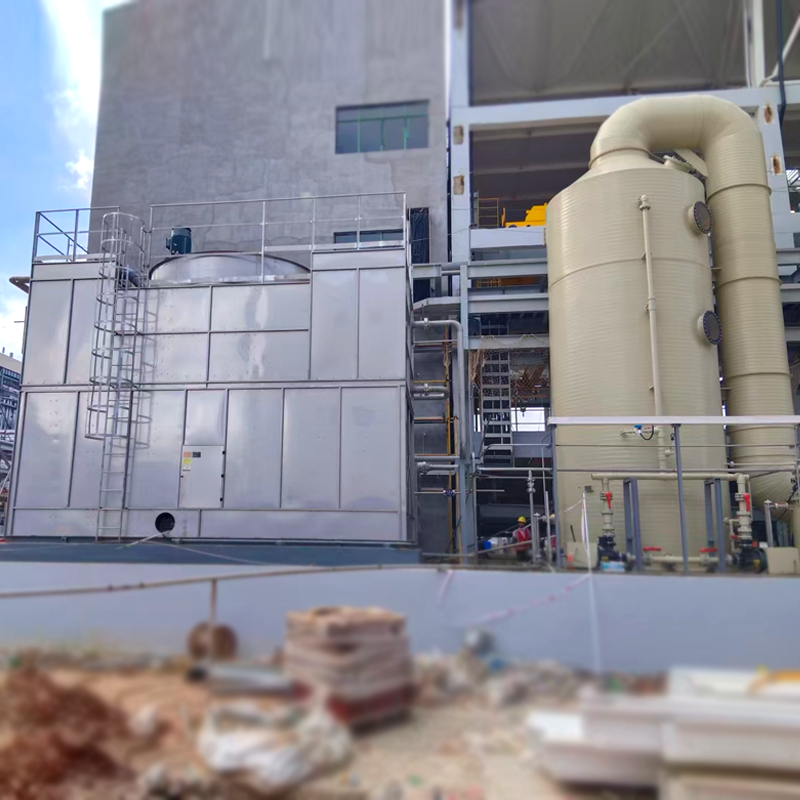
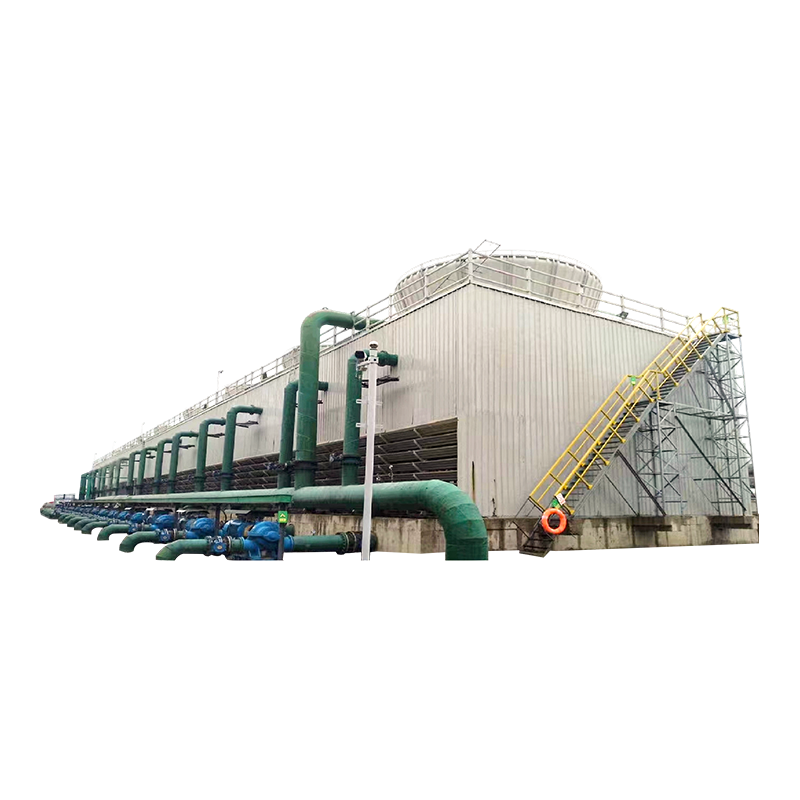
In modern industrial and HVAC systems, cooling towers serve as a cornerstone of thermal management. Among available technologies, the closed type cooling tower — also known as a closed-circuit cooling tower or fluid cooler — has emerged as the preferred solution for facilities demanding hygiene, efficiency, and long-term reliability. This article provides an in-depth technical comparison of open versus closed cooling tower systems, examines key selection criteria, and highlights why ZHEJIANG DONGJIE COOLING TOWER CO., LTD. stands at the forefront of closed-circuit cooling technology.
A closed type cooling tower operates on the principle of indirect heat exchange. The process fluid — typically chilled water or glycol — circulates through a sealed coil bundle inside the unit, completely isolated from the ambient air and the external spray water circuit. Heat is transferred from the coil surface to the sprayed water, which then evaporates partially as air flows across it, dissipating the thermal load to the atmosphere.
Unlike open cooling towers where the process fluid directly contacts the atmosphere, the closed-loop design prevents contamination, scaling, and fouling within the primary circuit. This fundamental distinction drives nearly every performance and economic advantage the closed type system provides.
Selecting the appropriate cooling tower type requires a thorough understanding of how each system differs across multiple performance dimensions.
In an open cooling tower, the process fluid is directly exposed to the atmosphere, introducing dust, algae, and pathogens into the circuit. The closed type cooling tower completely eliminates this risk: the sealed loop prevents any ingress of contaminants, protecting downstream equipment such as chillers, heat exchangers, and precision process machinery.
Open towers create warm, stagnant water conditions that are a known breeding environment for Legionella pneumophila. Closed type cooling towers significantly reduce Legionella risk because the spray water circuit is managed externally and separately from the process fluid, simplifying compliance with health and safety regulations such as ASHRAE 188 and the EU Biocidal Products Regulation.
Open towers require continuous and intensive chemical treatment of the circulating water, including biocides, corrosion inhibitors, and scale dispersants. With a closed type cooling tower, chemical treatment of the primary circuit is minimal; only the external spray water requires periodic management, substantially reducing annual chemical expenditure and the labor associated with water quality monitoring.
Closed type cooling towers can operate in a dry-bulb economizer mode when ambient temperatures fall below the process set-point, using fans alone without activating the spray system. This free cooling capability reduces compressor run-hours, lowering energy consumption significantly during transitional and winter seasons — an advantage open towers cannot fully replicate.
While the open cooling tower carries a lower upfront capital cost, the closed type cooling tower consistently delivers a lower total cost of ownership over a 15–20 year asset life through reduced water treatment, fewer downstream equipment failures, lower maintenance labor, and avoided regulatory compliance costs. The initial premium is typically recovered within 3–5 years.
Buyers frequently compare closed-circuit cooling towers with dry coolers (air-cooled fluid coolers). Both protect the process fluid in a sealed circuit, but the thermal performance characteristics differ substantially.
A dry cooler relies exclusively on sensible heat transfer — the ambient dry-bulb temperature directly limits achievable approach temperatures. When outdoor temperatures are high, cooling capacity drops sharply, forcing the use of supplemental mechanical chilling. A closed type cooling tower, by contrast, leverages evaporative cooling through the external spray system. Evaporation is governed by the wet-bulb temperature, which is consistently 5–12°C lower than the dry-bulb temperature in temperate climates, allowing the closed tower to achieve lower process-fluid outlet temperatures even during peak summer conditions.
For every 1°C reduction in process fluid outlet temperature achieved by a closed type cooling tower versus a dry cooler, a connected chiller or refrigeration compressor saves approximately 2–3% in electrical energy consumption. Over a 20-year asset life, this compounds to significant operational cost savings that far outweigh the additional investment in evaporative capability.
The heat exchange coil is the most critical component of any closed type cooling tower. High-quality units use galvanized steel, stainless steel 304/316, or copper coils depending on process fluid chemistry and application requirements. Coil wall thickness, fin pitch, and serpentine path design directly determine heat transfer area and thermal effectiveness. Reputable manufacturers conduct hydrostatic pressure testing at 1.5× working pressure to verify integrity before shipment.
Fan selection determines acoustic performance, energy consumption, and redundancy options. Axial fans with variable-frequency drives (VFDs) allow precise capacity modulation, reducing energy use by 40–60% during partial-load conditions. EC (electronically commutated) motor fans are increasingly specified for data center and pharmaceutical applications due to their efficiency at partial speed.
Uniform spray distribution over the coil surface is essential for maximizing evaporative efficiency and preventing dry spots that accelerate scaling. Premium designs use corrosion-resistant PVC or polypropylene nozzles with self-cleaning orifices and incorporate drift eliminators limiting water carryover to less than 0.001% of circulating water volume.
The sump basin must ensure adequate water retention for pump priming while enabling complete draining for winter shut-down or maintenance. High-quality basins incorporate stainless steel or high-density polyethylene liners, float-valve makeup water control, overflow and drain connections, and access panels positioned for safe service.
The casing and frame are exposed to constant moisture, biocide treatments, and UV radiation. Hot-dip galvanized steel or fiber-reinforced plastic (FRP) casing materials are preferred. FRP panels offer superior corrosion resistance in chemically aggressive atmospheres and do not require repainting over their service life, making them the material of choice for coastal and chemical plant installations.
Among global manufacturers of closed type cooling towers, ZHEJIANG DONGJIE COOLING TOWER CO., LTD. has established a reputation for engineering excellence, manufacturing precision, and customer-focused service. The following analysis examines the specific technical and commercial advantages that distinguish DONGJIE from competing suppliers.
DONGJIE's closed type cooling towers feature multi-pass coil assemblies manufactured from high-grade galvanized or stainless steel tubing with precisely controlled wall thickness. The coil configuration maximizes residence time and heat transfer area while maintaining low pressure drop, reducing circulating pump energy consumption. Each coil section undergoes hydrostatic pressure testing before dispatch — a quality checkpoint that some lower-cost manufacturers bypass, resulting in field failures that cause costly production downtime.
The choice of FRP panel construction sets DONGJIE apart from manufacturers relying solely on galvanized steel panels. FRP casings resist corrosive atmospheres encountered in coastal facilities, chemical plants, and food processing environments. The panels carry a service life expectancy exceeding 20 years without painting or surface retreatment, reducing maintenance costs substantially over the asset's operational period.
DONGJIE's spray water distribution employs a pressurized header and nozzle system designed to ensure uniform coverage of the entire coil surface. Anti-clog nozzles with orifice diameters sized to local water quality prevent premature blockage. High-efficiency drift eliminators meet the strict environmental standards applied in European and North American markets, protecting neighboring equipment and minimizing makeup water losses.
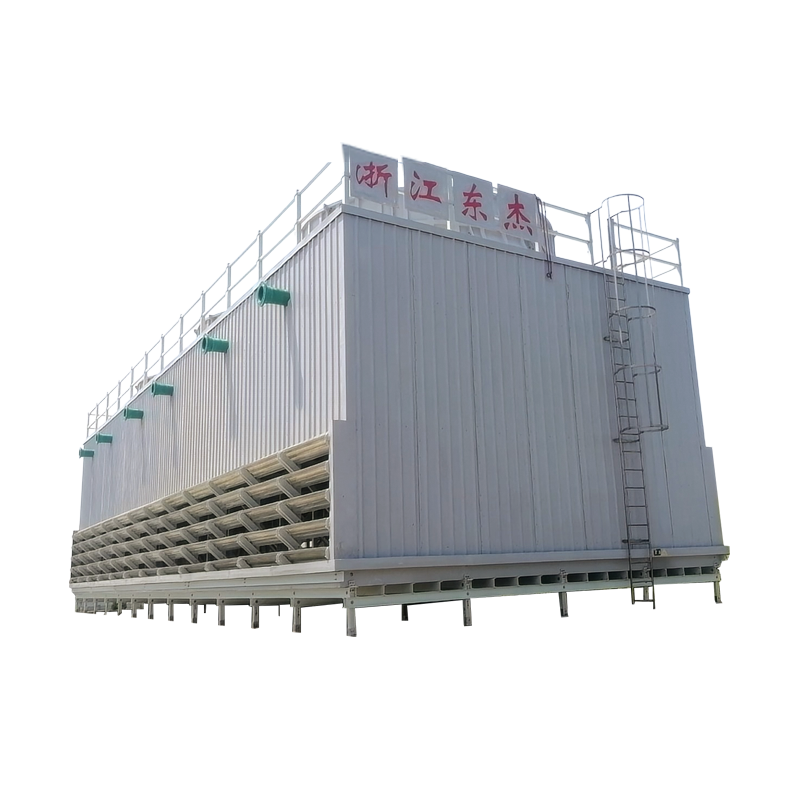
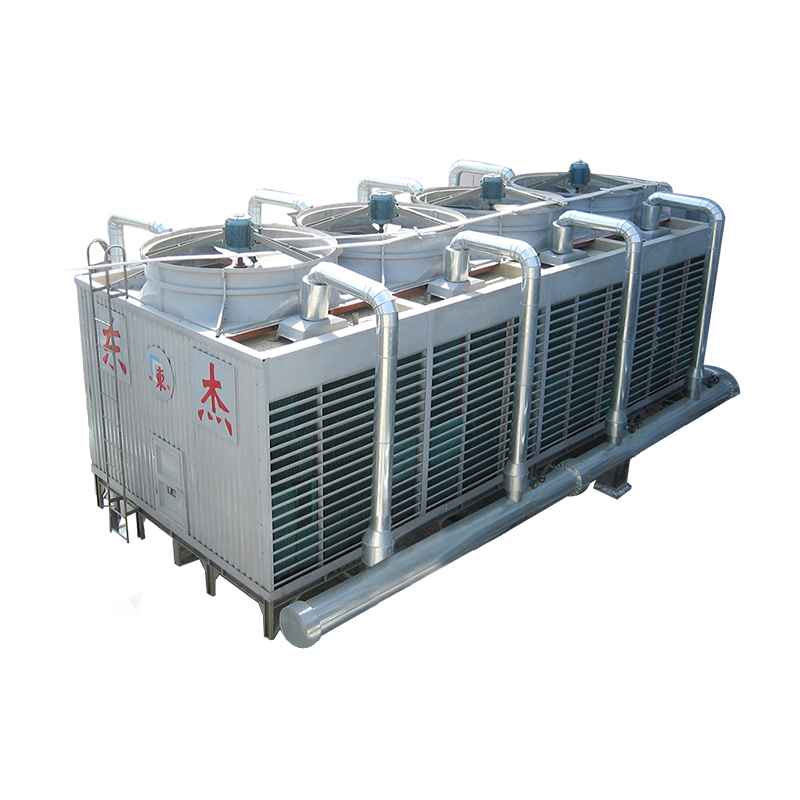
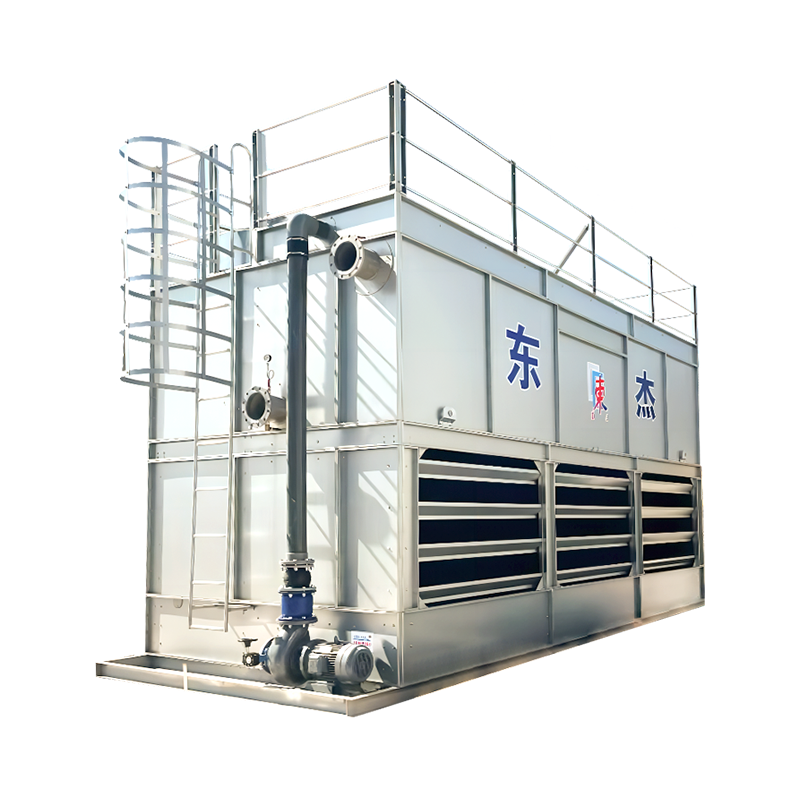
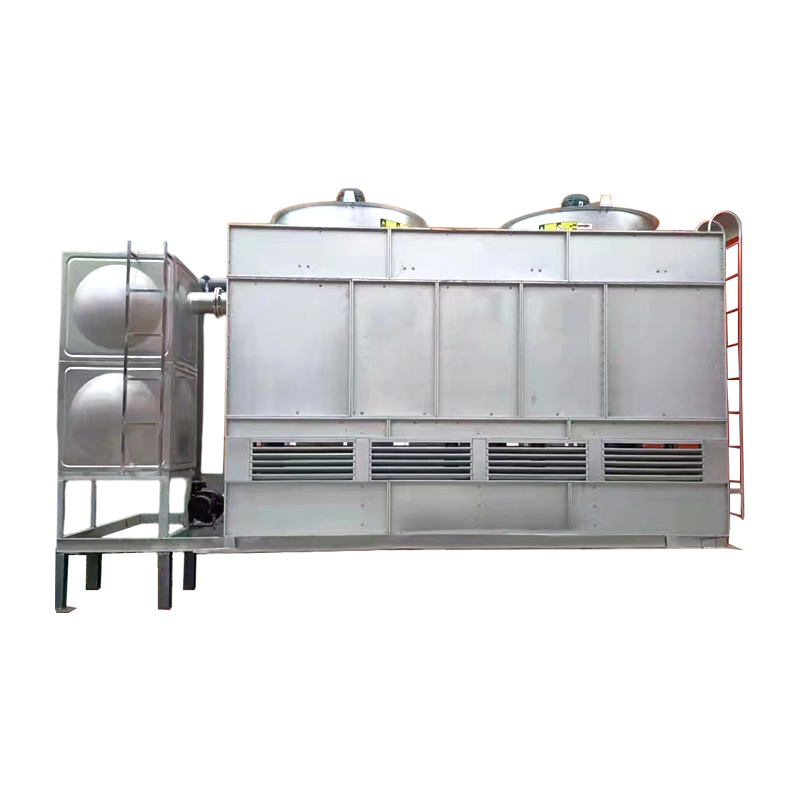
DONGJIE offers closed type cooling towers in multiple configurations, accommodating diverse project constraints:
This configurational flexibility allows designers to optimize for footprint, noise constraints, and architectural integration — factors that single-configuration manufacturers cannot accommodate without significant custom surcharges.
DONGJIE's closed type cooling towers are available with low-noise, high-efficiency axial fans and EC motor options fully compatible with building management system (BMS) integration. Optimized coil geometry minimizes pump head requirements, and VFD-compatible motor configurations allow precise capacity modulation that reduces annual energy consumption by up to 50% compared to fixed-speed alternatives during part-load operation.
DONGJIE operates under an ISO 9001 quality management system with products compliant with GB/T and applicable international standards for pressure vessels and heat exchangers. The company has an extensive export record to Southeast Asia, the Middle East, Europe, and the Americas, with documented experience in CE marking, export documentation, and sea-freight packing for safe long-distance delivery.
Operating from Zhejiang province — a manufacturing hub with deep supply chains for stainless steel, FRP materials, electric motors, and controls — DONGJIE achieves economies of scale that enable highly competitive pricing compared to European or North American equivalents of equivalent specification. Buyers receive factory-gate prices with direct export capability, eliminating intermediary mark-ups common when purchasing through trading agents.
DONGJIE provides pre-sales thermal selection assistance, detailed maintenance manuals with each unit, on-site commissioning guidance, and after-sales spare parts availability. This end-to-end support minimizes project risk for first-time buyers of closed type cooling towers and reduces the technical burden on facility teams unfamiliar with closed-circuit cooling equipment.
Data centers demand uninterrupted, precision cooling with zero tolerance for contamination of cooling water entering plate heat exchangers or direct liquid cooling manifolds. The closed type cooling tower's sealed primary circuit guarantees fluid purity, while the evaporative mode maintains stable water supply temperatures that enable free-cooling economizer hours that can reduce PUE (Power Usage Effectiveness) by 15–30% annually in temperate climates.
GMP environments require documented evidence that cooling water cannot introduce biological or chemical contaminants into production processes. A closed type cooling tower isolates the process circuit completely, satisfying regulatory requirements under FDA, EU GMP Annex 1, and equivalent frameworks without the need for additional barrier heat exchangers that add capital cost and pressure drop.
In large commercial buildings and district energy networks, closed-circuit fluid coolers serve as the condensing side of water-cooled chillers or heat pumps. The sealed circuit protects expensive refrigerant-to-water heat exchangers from scale buildup that would otherwise require periodic mechanical or chemical descaling, extending service intervals and maintaining chiller COP at design values throughout the operational life.
Plastic injection molding, hydraulic power units, induction furnaces, laser systems, and CNC machining centers all generate concentrated heat loads that must be rejected reliably. The closed type cooling tower provides consistent supply temperatures regardless of ambient fluctuations, protecting sensitive process equipment from thermal shock and ensuring repeatable production quality.
While the closed type cooling tower reduces maintenance in the primary fluid circuit, the spray water and fan systems require periodic attention. Best-practice maintenance programs include the following tasks:
DONGJIE provides detailed maintenance manuals specifying service intervals, consumable part numbers, and recommended cleaning agents compatible with casing and coil materials, reducing the technical burden on facility teams who may not have prior experience with closed-circuit cooling equipment
The closed type cooling tower represents the optimal technology choice for any application where fluid purity, equipment longevity, energy efficiency, and regulatory compliance are priorities. Its superiority over open cooling towers in preventing contamination, and its advantage over dry coolers in achieving lower approach temperatures through evaporative cooling, makes it the system of choice across data centers, pharmaceutical plants, food processing facilities, and precision industrial environments.
Within the closed type cooling tower market, ZHEJIANG DONGJIE COOLING TOWER CO., LTD. occupies a strong competitive position through its combination of advanced coil manufacturing, FRP casing durability, flexible configuration options, global export capability, and competitive factory pricing anchored in an efficient Zhejiang supply chain. For project engineers, procurement teams, and facility managers evaluating closed-circuit cooling solutions, DONGJIE merits serious consideration as a supplier capable of delivering both technical performance and long-term value.
Related Products
Industrial facilities, commercial buildings, and power generation plants all share a common operational challenge, the need to efficiently remove excess heat g...
READ MOREWhen purchasing an FRP (Fiber Reinforced Plastic) Composite Cooling Tower, the most critical technical indicators to evaluate are: thermal performance (cooling...
READ MOREA plant engineer managing a 2 MW injection molding process was facing a familiar problem. The open cooling tower was letting suspended solids into the mold coo...
READ MOREA cooling tower rarely fails all at once. What often happens is quieter: the cold water temperature creeps up by a degree or two over a season, drift becomes v...
READ MORECooling towers are essential to heat rejection in industrial plants and HVAC systems, but they are also central to the conversation about Legionnaires’ disease...
READ MOREA Closed Circuit Cooling Tower Keeps Process Fluid Isolated From Open Air and Airborne Contaminants A closed circuit cooling tower is essential for contaminati...
READ MORE
dj@djcoolingtower.com
+86-0575-82433555 (Extension 0)
+86 130 6551 5158 Manager Zhang
