

 English
 русский
 中文简体

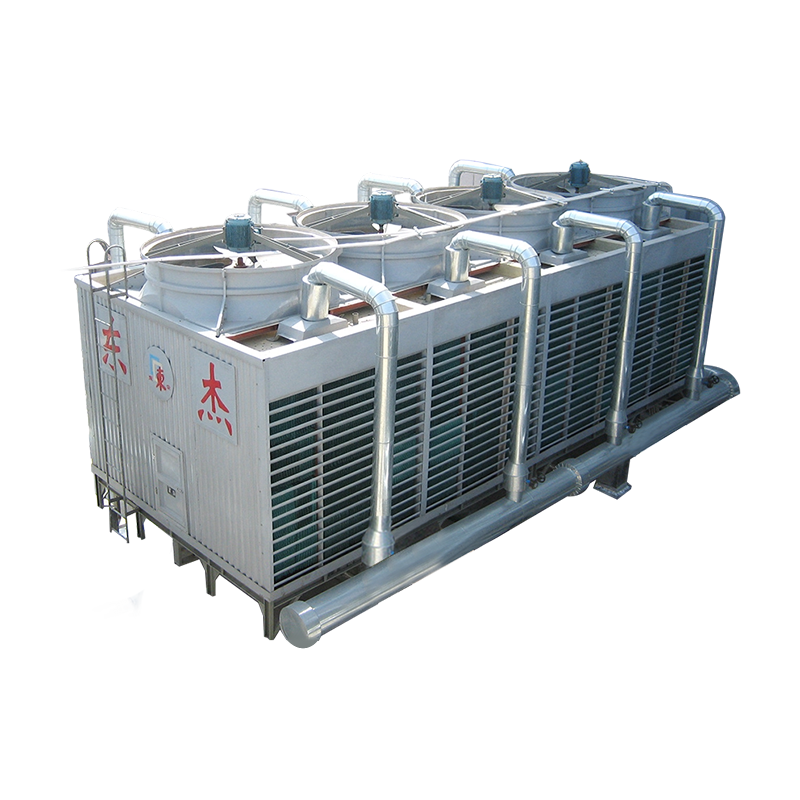
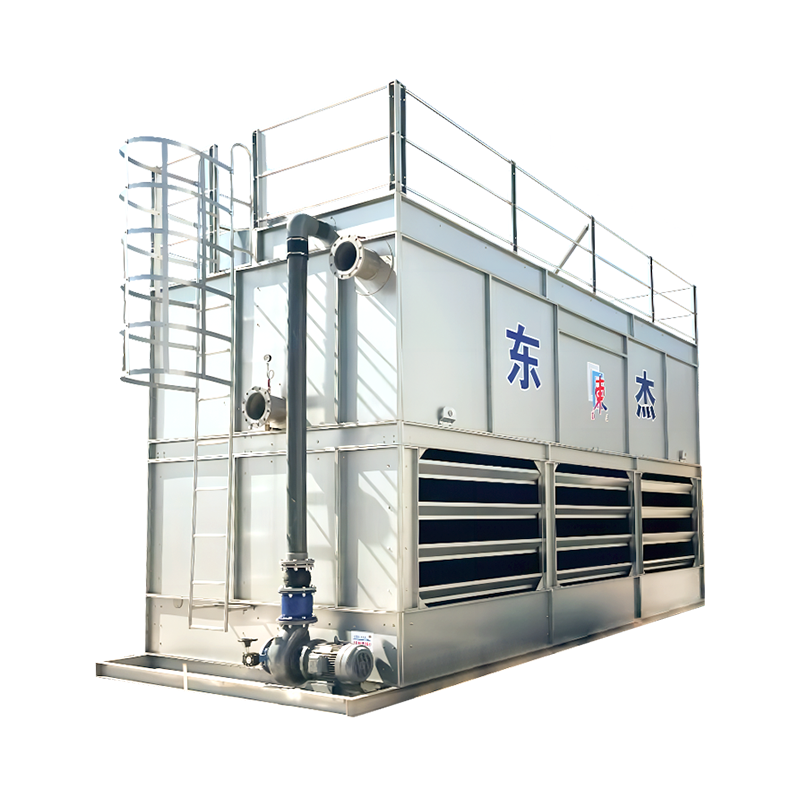
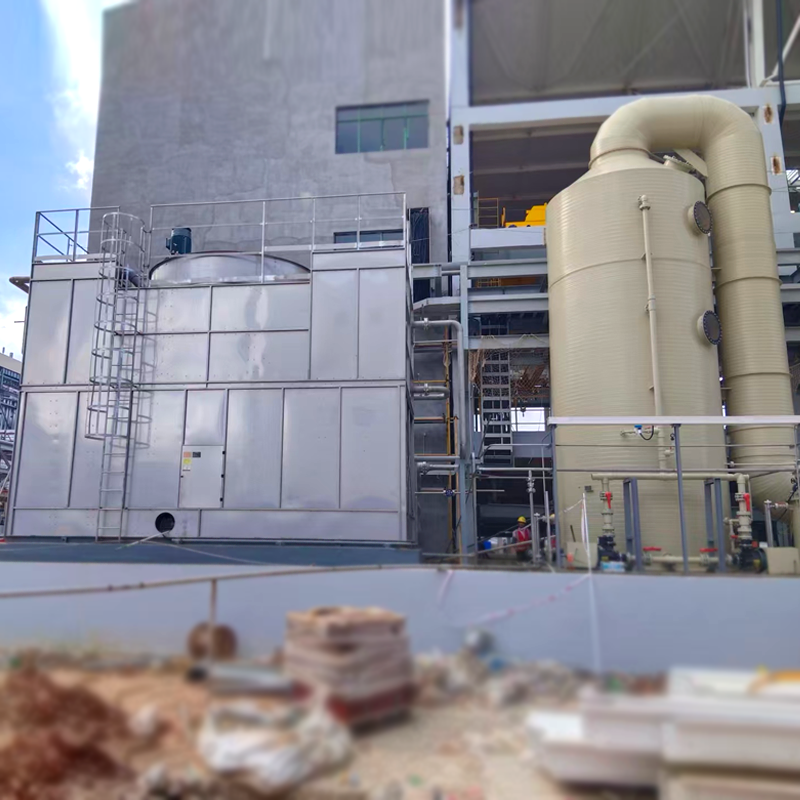
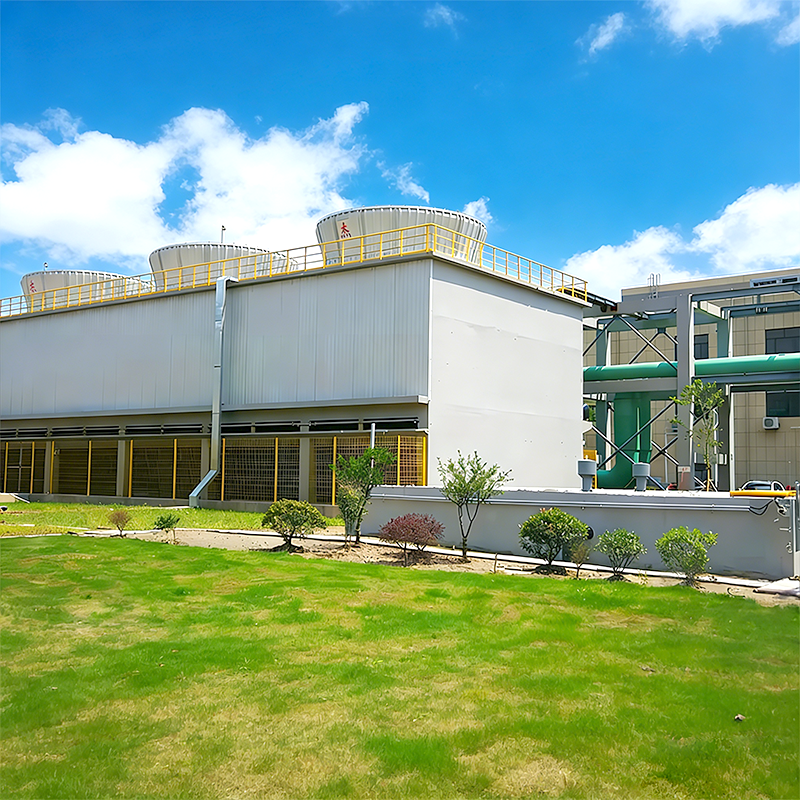
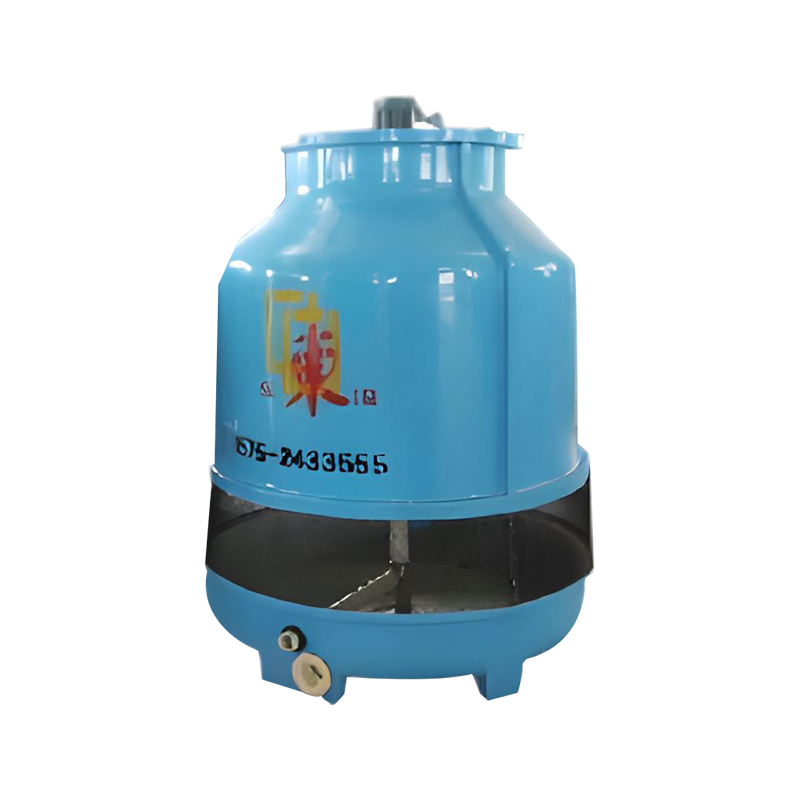
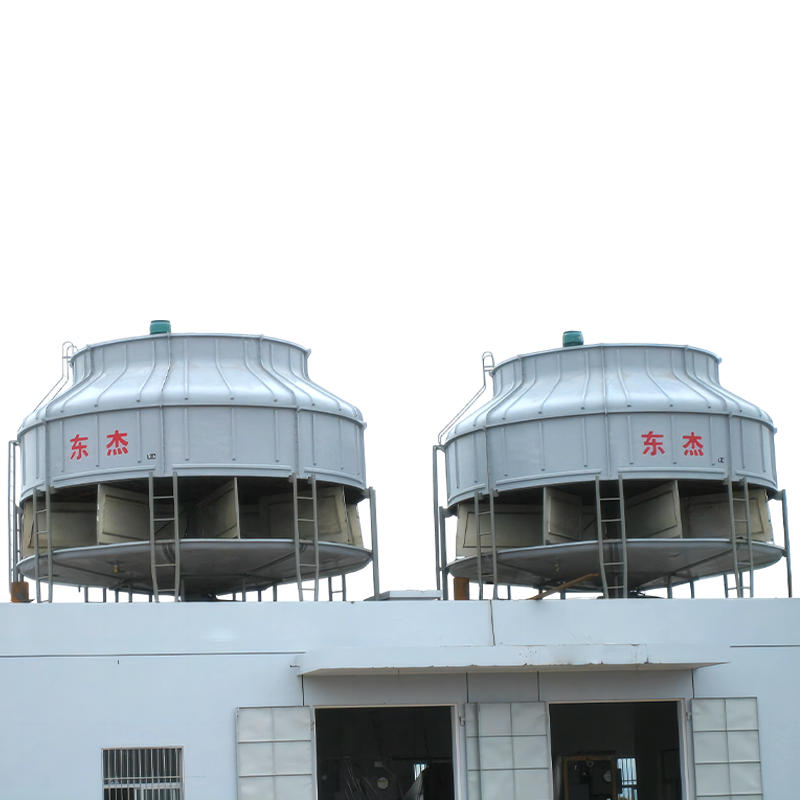
Cooling towers are among the most visible pieces of equipment in large industrial cooling systems. A circular cooling tower, in particular, offers a compact an...
READ MORENov 06, 2026
Content
An FRP cooling tower is a heat rejection unit whose casing, structural frame, and often its cold water basin are built from glass-fiber reinforced polymer rather than painted carbon steel or concrete. The physics inside it has not changed: hot process water is spread over fill, air moves across it, and a small share of the water evaporates, carrying heat away with it. What does change is everything wrapped around that exchange, including the shell that must sit in warm, wet, chemically loaded air for years, the beams that carry the fan and the wind load, and the way the whole unit is shipped and bolted together on site.
We mold panels, pultrude structural profiles, and pre-assemble towers indoors before they leave our works in Shangyu, so the notes below come from the shop floor and from site visits rather than from a brochure.
People often say "FRP tower" and mean only the outer shell. In practice, the composite content goes deeper, and knowing which parts are fiberglass, which are plastic, and which are still metal helps you read a quotation properly.
Because panels are molded and profiles are pultruded to fixed cross-sections, a large tower arrives as a kit of predictable parts. That is what supports quick site assembly with fewer pieces, and it is also what makes later replacement of a single damaged panel practical instead of painful.
Almost every rectangular FRP tower is one of two layouts. In a counterflow unit the air rises against the falling water; in a crossflow unit the air moves horizontally across the falling water. Both reject heat well. They differ in footprint, height, and how easily a maintenance team can reach the fill.
| Point of comparison | Counterflow FRP tower | Crossflow FRP tower |
|---|---|---|
| Air and water direction | Air rises against falling water | Air crosses the falling water |
| Footprint and height | Smaller footprint, taller unit | Larger footprint, lower profile |
| Fill and access | Fill enclosed, reached through access doors | Fill exposed at the sides, easy to inspect |
| Approach temperature | Usually better for a tight approach | Adequate for standard duty |
| Typical fit | Retrofits, tight plots, process cooling | High flows, open sites, dirtier water |
If your plot is tight and the process needs a close approach to the wet-bulb temperature, counterflow usually earns its place. If access for cleaning matters more than floor area, or if the water carries a little more debris than you would like, the crossflow arrangement is often the calmer choice.
Our composite range covers both air paths in a rectangular, modular format, which means a single project can mix layouts where the site demands it.
The DV series is the one we propose when the plant room is constrained and the thermal duty is unforgiving. Its enclosed fill and induced-draft layout keep the footprint modest while holding a stable approach across the load range.
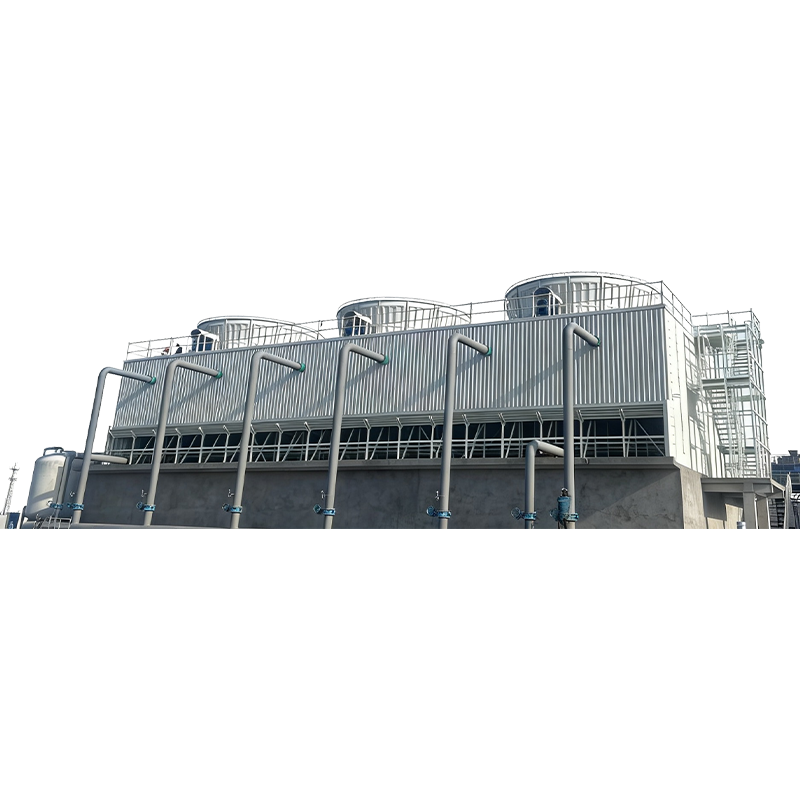 DV Series Rectangular Counterflow FRP Composite Cooling TowerCompact counterflow FRP tower with corrosion-resistant composite construction and stable thermal performance for constrained plant rooms and demanding loads.View Product →
The DHV series trades a little floor area for a lower profile and much friendlier access to the fill and spray system, which suits large circulating flows and sites where maintenance happens during short shutdown windows.
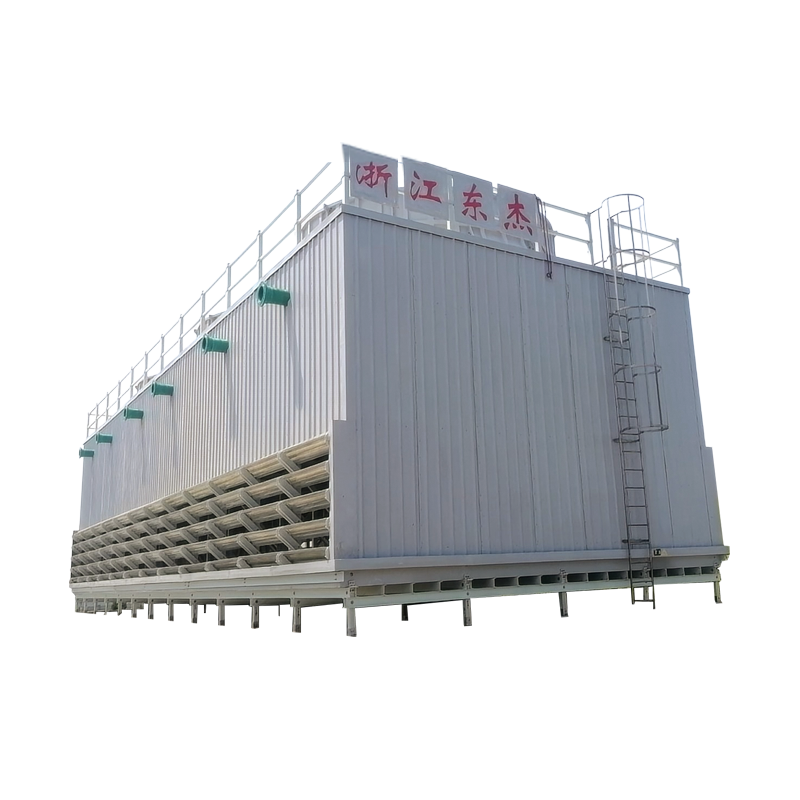 DHV Series Rectangular Crossflow FRP Composite Cooling TowerLow-profile crossflow FRP tower with accessible fill and spray system, suited to large circulating flows and short maintenance shutdowns.View Product →
Both series share the same material philosophy and the same bolted-panel logic. If you are comparing them against closed-circuit or steel-framed options, the full FRP composite cooling tower range is the better place to start.
The commercial case for FRP is rarely about the purchase price alone. It is about what the tower costs while it is running.
None of this makes FRP indestructible. Poor resin choice, thin laminate, or careless sealing at joints will shorten any tower's life, which is why the specification of the laminate and the quality of the gaskets deserve as much attention as the fan curve.
Composite cooling towers are common wherever water is scarce, the atmosphere is aggressive, or the structure has to be assembled quickly. The industries we serve most often include:
In each of these, the tower is a supporting asset rather than the product being made, so downtime for repair is expensive and predictable performance matters more than a marginal saving at purchase.
When a project team asks us to size a unit, we work through the same short list every time.
If you want to go further into the numbers, our engineers wrote a short guide to the key technical indicators to check before buying a cooling tower that walks through the range and approach relationship in plain language.
Composite towers are forgiving on site but not indifferent. The unit wants a level, well-drained base with adequate air intake clearance on every open side; a tower starved of air will quietly underperform for its whole service life. Lifting points are marked on the panels, and sections should be bolted in the sequence supplied so that joints close without strain.
Once running, the routine is modest: check the distribution basin for debris, confirm the spray pattern is even, inspect drift eliminators for scale, verify fan vibration and belt or coupling condition, and look at the gaskets at each panel joint once a year. A tower that is washed down occasionally and kept free of biological growth will typically hold its thermal margin far longer than one that is only visited when the outlet temperature starts to drift.
Choosing an FRP cooling tower is really a matching exercise: the right air path for the plot, the right laminate for the water and the atmosphere, and the right panel breakdown for the crane and crew that will be on site. Get those three aligned and the unit tends to disappear into the background of the plant, which is exactly what a cooling tower should do. If you would like a second opinion on a duty point or a layout, our team is glad to look at the drawings with you.
Related Products
Cooling towers are among the most visible pieces of equipment in large industrial cooling systems. A circular cooling tower, in particular, offers a compact an...
READ MOREWhy Steel Structure Cooling Towers Dominate Large-Scale Industrial Cooling A Steel Structure Cooling Tower is the correct specification choice for large-scale ...
READ MOREA 2 MW chiller in a commercial building rejects roughly 700 kW of heat through its condenser water loop. That heat has to go somewhere. In many mid- to large-s...
READ MOREWhen purchasing an FRP (Fiber Reinforced Plastic) Composite Cooling Tower, the most critical technical indicators to evaluate are: thermal performance (cooling...
READ MOREAs the chemical processing and new energy sectors confront the converging imperatives of decarbonization targets, tightening environmental regulations, and th...
READ MOREIn industrial cooling systems, water is both the most essential element and the most common source of operational problems. Scale, corrosion, fouling, and micr...
READ MORE
dj@djcoolingtower.com
+86-0575-82433555 (Extension 0)
+86 130 6551 5158 Manager Zhang
